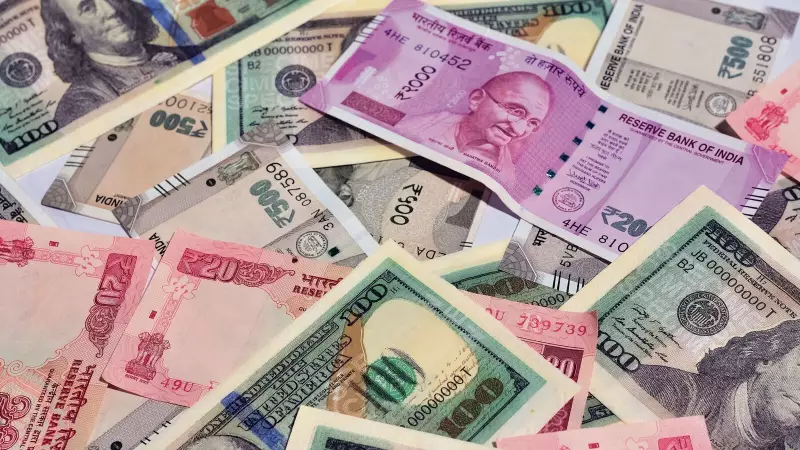
Indian Rupee Stages Comeback After RBI's Strong Defense
The Indian rupee made a marginal recovery against the US dollar on Monday, November 24, following a sharp decline witnessed during the previous trading session. This bounce-back occurred after the Reserve Bank of India intervened strongly to alleviate significant downward pressure on the national currency.
Market Movement and Key Levels
On Monday, the rupee was trading at 89.16 against the US dollar, marking an appreciation of 0.35% for the day. This recovery came after the currency touched an all-time low of 89.48 on Friday, dangerously close to the psychological barrier of 90 per US dollar. The Friday slump saw the rupee breach the 88.80 level, which bankers revealed the RBI had been defending for several weeks.
Behind the Rupee's Volatility: Key Factors Explained
RBI's Strategic Intervention

According to market reports, the central bank actively sold US dollars through both the order-matching platform and the non-deliverable forward market. This decisive action helped improve overall market sentiment and provided much-needed support to the struggling rupee.
India-US Trade Deal Uncertainty
RBI Governor Sanjay Malhotra attributed the recent rupee decline primarily to increased demand for the US dollar. He indicated that this pressure might ease if India and the United States finalize a trade agreement. Malhotra also emphasized that India's substantial foreign exchange reserves continue to provide strong support for the currency. Kunal Sodhani, Head of Treasury at Shinhan Bank in Mumbai, noted that "Expectations for clarity on the India-U.S. trade deal remain unmet, and with timelines still unclear, investor sentiment stays fragile."
Global Dollar Strength
The dollar index hovered close to a six-month peak on Friday, contributing to the rupee's weakness. Jateen Trivedi, VP Research Analyst - Commodity and Currency at LKP Securities, explained: "Rupee traded weak, pressured primarily by dollar strength as the dollar index moved above 100$, overshadowing the minor positive FII inflows. While domestic flows offered some support, the broader momentum remains tilted toward weakness given the firm USD and ongoing global uncertainty." He expects the rupee to move within a range of 88.40-89.00.
US Federal Reserve Policy Impact
Anuj Gupta, Director of Ya Wealth Research & Advisory, highlighted that the rupee has depreciated by 4.59% this year. This decline followed reduced expectations for interest rate cuts by the Federal Reserve, which caused the dollar and bond yields to increase sharply, subsequently affecting multiple global currencies. Market analysts now anticipate a higher probability that the Federal Reserve will deliver a third and final rate cut this year.
Trade Deficit Concerns
The rupee has been the weakest performing currency in Asia this year, and any further decline could intensify foreign investor selling in Indian equities, according to a Yes Bank economist quoted by Bloomberg. The economist further revealed that India's trade deficit reached a record high in October, as shipments to the US dropped for the second consecutive month following the introduction of 50% tariffs. "On the back of a higher-than-expected trade deficit, net financial flows have been on the weaker side, thereby pressuring the rupee to depreciate while RBI had been containing the volatility," the economist added.
Market Outlook and Implications
The renewed pressure on the rupee that emerged on Friday is expected to persist through the current week. Market participants will closely monitor the RBI's continued intervention strategies, developments in the India-US trade negotiations, and global dollar movements. The central bank's active role in containing volatility remains crucial for maintaining stability in the currency markets, especially given the ongoing global economic uncertainties and domestic trade challenges.