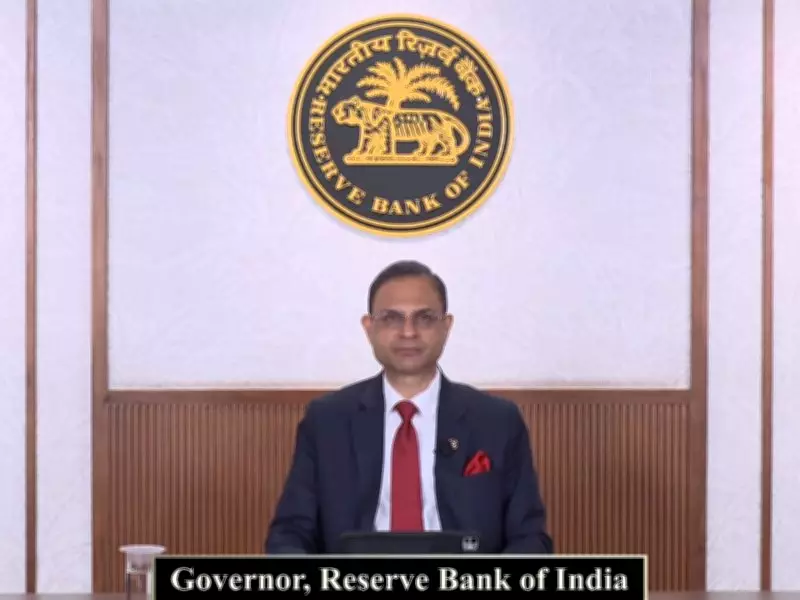
RBI Maintains Status Quo on Repo Rate at 5.25%
The Reserve Bank of India (RBI) has announced its decision to keep the key policy repo rate unchanged at 5.25% during its latest monetary policy review. This marks the third consecutive meeting where the central bank has opted to hold rates steady, reflecting a cautious approach in the face of evolving economic conditions both domestically and internationally.
Monetary Policy Committee's Neutral Stance
The Monetary Policy Committee (MPC), led by RBI Governor Shaktikanta Das, has reiterated its neutral policy stance, emphasizing a data-dependent approach to future rate adjustments. The committee highlighted that while inflation remains a primary concern, it is closely monitoring global economic developments and their potential spillover effects on the Indian economy.
The decision to maintain the repo rate at 5.25% comes amid a backdrop of significant policy divergence among major central banks worldwide. For instance, the US Federal Reserve has been tightening monetary policy to combat inflation, while other economies like the European Central Bank are grappling with slower growth and different inflationary pressures.

Factors Influencing the RBI's Decision
Several key factors contributed to the RBI's decision to hold rates:
- Inflation Dynamics: Domestic inflation, particularly in food and fuel prices, has shown volatility, prompting the RBI to adopt a wait-and-watch strategy.
- Global Economic Uncertainty: The ongoing geopolitical tensions and varying monetary policies across advanced economies pose risks to India's growth trajectory.
- Growth Considerations: The RBI aims to support economic recovery while ensuring price stability, balancing the need for growth with inflation control.
Governor Das noted that the MPC is committed to aligning inflation with the target of 4% over the medium term, but acknowledged the challenges posed by external factors. The central bank's neutral stance allows flexibility to respond to emerging data, whether it indicates rising inflation or slowing growth.
Implications for the Indian Economy
By keeping the repo rate unchanged, the RBI signals stability in borrowing costs for businesses and consumers. This decision is expected to:
- Provide relief to borrowers, as interest rates on loans are likely to remain steady in the near term.
- Support investment and consumption, fostering economic activity amid global headwinds.
- Maintain financial market confidence, as the RBI's predictable policy approach reduces uncertainty.
However, experts caution that if inflation pressures intensify or global conditions worsen, the RBI may need to reassess its stance in future meetings. The central bank has emphasized its readiness to act proactively to safeguard macroeconomic stability.
In summary, the RBI's decision to hold the repo rate at 5.25% underscores its balanced approach to monetary policy, prioritizing inflation control while supporting growth in a complex global environment. Stakeholders across sectors will be closely watching upcoming economic data for clues on the central bank's next moves.