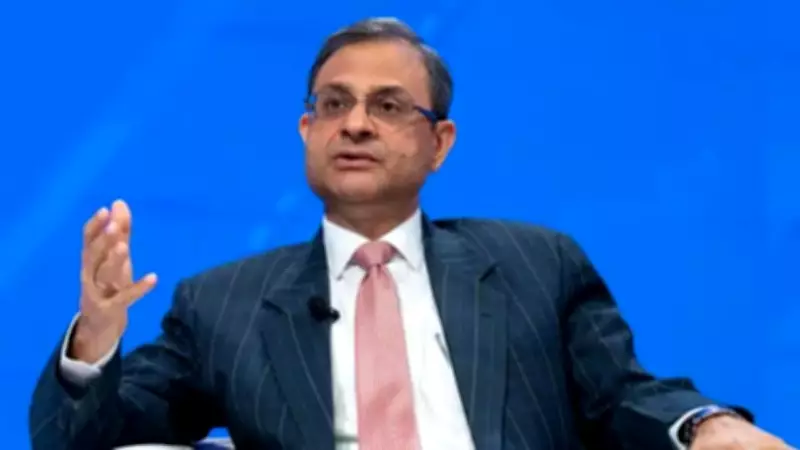
RBI Governor Declares Indian Economy in Strengthened 'Goldilocks' Phase
Reserve Bank of India (RBI) Governor Sanjay Malhotra announced on Friday that the Indian economy is currently positioned in an even more favorable state than it was two months prior. In December, Malhotra had characterized the economic environment as a "Goldilocks period," a term denoting a phase of balanced growth coupled with stable inflation. Speaking to reporters in New Delhi, he elaborated that the nation's economic prospects have notably improved while inflationary pressures remain firmly under control.
Growth and Inflation Dynamics Show Positive Trends
Governor Malhotra emphasized that the economy continues to reside in the same advantageous sweet spot, potentially enhanced due to upward momentum in growth metrics. "We are certainly in the same sweet spot, maybe even better because growth is looking up, growth is looking better, and inflation is the same," he stated, drawing a direct comparison with the economic landscape observed in December. This assessment underscores a robust economic trajectory where expansionary forces are gaining strength without triggering significant price escalations.
Monetary Policy to Maintain Accommodative Stance
Regarding monetary policy, Malhotra indicated that borrowing costs are likely to remain at low levels for an extended duration. "I do expect that the policy rates should continue to be at low levels for a long period of time," he affirmed. This perspective suggests that the RBI intends to sustain an accommodative monetary stance to support economic recovery and investment activities. The central bank will persist in ensuring ample liquidity within the financial system, enabling earlier interest rate reductions to fully permeate credit markets, bond yields, and business operations.

Inflation Analysis and Core Stability
On the inflation front, Malhotra acknowledged that headline consumer price index (CPI) figures might experience fluctuations influenced by factors such as base effects, volatile food prices, and increasing precious metal costs. However, he stressed that core inflation and underlying economic trends do not exhibit signs of sustained price pressures. This distinction highlights that temporary variations in headline inflation are not indicative of deep-seated inflationary threats, reinforcing the stability of the current economic framework.
Growth Forecast Boosted by Trade Agreement Prospects
Malhotra revealed that a proposed trade agreement with the United States served as one of the key reasons prompting the RBI to elevate its GDP growth forecast by 20 basis points. This adjustment reflects optimism regarding enhanced trade relations and their potential to stimulate economic activity. Additionally, he clarified that the RBI is not engaged in selling its US Treasury holdings, though alterations in foreign exchange reserves can indirectly impact such positions. This clarification addresses market speculations and underscores the central bank's strategic reserve management.
Government Borrowing and Financial Reforms Addressed
Addressing concerns over the government's planned gross borrowing of Rs 17.2 lakh crore for the fiscal year 2027, Malhotra explained that the elevated figure primarily reflects repayments due during that period. He noted that the net increase in borrowing is approximately only Rs 20,000 crore, mitigating apprehensions about excessive fiscal expansion. Furthermore, he welcomed recent government reforms, including measures to permit increased foreign investment in the insurance sector and the provision of tax benefits for data centers. These initiatives are anticipated to encourage domestic and international investment, fostering long-term economic resilience.
Banking Sector Health and Stability Indicators
On the issue of banks' high credit-deposit ratio, Malhotra characterized this as a cyclical trend rather than a structural concern. The RBI prioritizes broader financial stability indicators, such as liquidity coverage ratios and funding ratios, to assess the overall health of the banking system. This approach ensures that temporary fluctuations in credit-deposit metrics do not overshadow fundamental stability, maintaining confidence in India's financial institutions.

Governor Malhotra's comprehensive remarks paint a picture of an Indian economy navigating a reinforced 'Goldilocks period,' where growth acceleration and inflation control coexist harmoniously. With supportive monetary policies, strategic reforms, and vigilant oversight, the RBI aims to sustain this favorable economic equilibrium, positioning India for continued progress on the global stage.