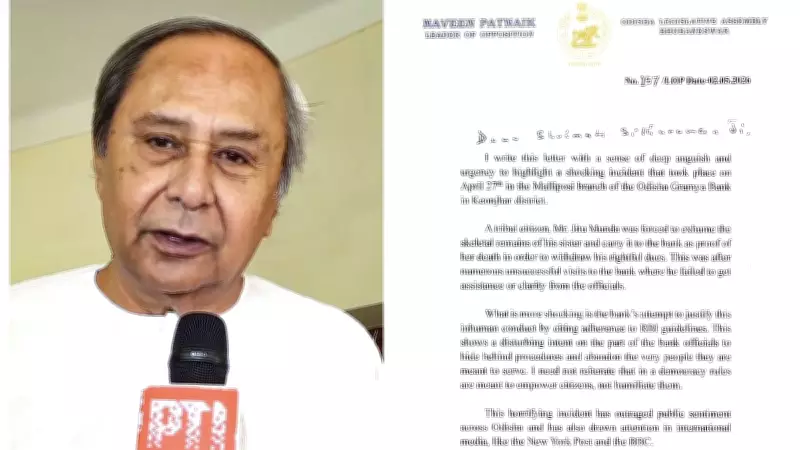
Odisha Chief Minister Naveen Patnaik has drawn the attention of Union Finance Minister Nirmala Sitharaman to the need for a more humane banking administration in the state. This comes in the wake of a disturbing incident where skeletal remains were discovered near a bank branch, allegedly linked to the stress of loan recovery.
The Incident That Sparked Concern
Earlier this month, the skeletal remains of a man were found near a branch of a nationalized bank in Odisha's Balasore district. Preliminary investigations suggested that the deceased had been under immense pressure due to loan recovery actions by the bank. The incident has raised serious questions about the methods employed by banks in recovering loans and the lack of sensitivity towards borrowers facing financial distress.
Patnaik's Appeal to the Finance Minister
In a letter to Finance Minister Nirmala Sitharaman, Chief Minister Patnaik expressed deep concern over the incident and called for a review of banking practices. He emphasized the need for a compassionate approach that takes into account the financial and emotional well-being of borrowers. Patnaik urged the central government to issue guidelines to all banks operating in Odisha to ensure that loan recovery processes are conducted with empathy and without causing undue harassment.

The Chief Minister also highlighted that such incidents not only reflect poorly on the banking system but also undermine the trust of the common people in financial institutions. He requested Sitharaman to intervene personally and direct banks to adopt more humane policies, especially in rural and semi-urban areas where borrowers are often vulnerable.
Banking Administration Under Scrutiny
The Odisha skeleton episode has once again brought the spotlight on the aggressive loan recovery practices adopted by banks. In recent years, there have been numerous reports of borrowers being subjected to humiliation, threats, and even physical abuse by recovery agents. The incident in Balasore is a grim reminder of the human cost of such practices.
Experts have called for a balanced approach that protects the interests of both banks and borrowers. While banks have a legitimate right to recover loans, they must do so within the framework of the law and with respect for human dignity. The Reserve Bank of India (RBI) has already issued guidelines on fair practices in lending, but enforcement remains a challenge.
Reactions and Demands
The incident has sparked outrage among civil society groups and political parties in Odisha. Opposition parties have demanded a thorough investigation and stricter regulation of bank recovery mechanisms. Several activists have also called for the establishment of a grievance redressal mechanism for borrowers who feel harassed.
Meanwhile, the bank involved in the incident has expressed regret and promised to cooperate with the authorities. However, critics argue that such incidents are symptomatic of a deeper malaise in the banking sector, where targets and performance metrics often override human considerations.
Looking Ahead
Chief Minister Patnaik's intervention is seen as a significant step towards addressing the issue. By drawing the Finance Minister's attention to the matter, he has put the spotlight on the need for systemic change. It remains to be seen whether the central government will take concrete steps to ensure that banking operations are conducted with greater sensitivity.
As the debate continues, one thing is clear: the banking sector cannot afford to ignore the human element. The Odisha skeleton episode is a stark reminder that behind every loan default is a story of struggle and despair. A humane banking administration is not just a moral imperative but also a necessity for building a more inclusive and compassionate financial system.