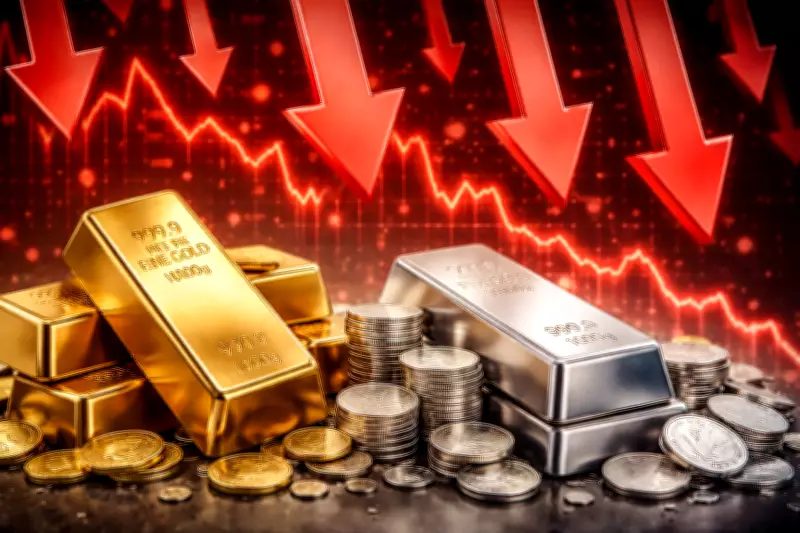
Gold and Silver Prices Plunge 9% Ahead of Union Budget Presentation
In a dramatic turn of events, gold and silver prices experienced a significant downturn on Sunday, February 1, 2026, as both precious metals crashed by approximately 9% during a special trading session on the Multi Commodity Exchange (MCX). This sharp decline occurred just ahead of Finance Minister Nirmala Sitharaman's presentation of the Union Budget 2026–27 in Parliament, marking a stark reversal from the sustained rally that had characterized the beginning of the year.
Market Turmoil and Lower Circuit Triggers
The selloff was so severe that it triggered lower circuit limits for both gold and silver futures contracts. Specifically, April gold futures plummeted by Rs 13,711 to settle at Rs 1,38,634 per 10 grams, while silver futures for March delivery fell to Rs 2,65,900 per kg. This followed an already substantial drop in the previous session, where gold had retreated sharply from its record peak of Rs 1,93,096 per 10 grams.
The impact of this precious metals crash extended beyond the commodities market, weighing heavily on the shares of the Multi Commodity Exchange itself. MCX shares slid by 10% to hit their lower circuit at Rs 2,145.25, reflecting the broader market sentiment of caution and volatility.

Factors Behind the Sharp Correction
Market analysts and experts have identified several key drivers behind this sudden and severe correction in gold and silver prices:
- Aggressive Profit-Booking: With both metals having recorded months of relentless gains, investors seized the opportunity to lock in profits, leading to widespread selling pressure.
- Liquidation of Long Positions: Many leveraged positions that had amplified gains during the rally were unwound, exacerbating the downward momentum.
- Strengthening US Dollar: A firmer dollar typically dampens demand for dollar-denominated commodities like bullion, contributing to the price decline.
- Global Policy Uncertainty: Speculation intensified following President Donald Trump's nomination of Kevin Warsh, known for his hawkish inflation views, as the next Federal Reserve chair. This raised concerns that interest rate cuts might be delayed longer than anticipated.
- Budget Day Caution: Traders exercised prudence ahead of the Union Budget presentation, reducing exposure to volatile assets.
Scale of the Market Erosion
The financial impact of this correction has been substantial. According to Mirae Asset ShareKhan, gold's market capitalization fell by nearly $3.5 trillion, while silver shed around $1.5 trillion, resulting in a combined erosion of approximately $5 trillion. This highlights the magnitude of the selloff, even as both metals have still posted significant gains since the start of the year.
Long-Term Fundamentals Remain Intact
Despite the recent plunge, market experts emphasize that the long-term fundamentals supporting precious metals remain unchanged. Factors such as continued central bank purchases, concerns over fiat currency debasement, widening government fiscal deficits, and growing industrial demand for silver—particularly from electric vehicles, artificial intelligence, and renewable energy sectors—are expected to underpin prices over the longer term.
Banking and market expert Ajay Bagga noted that while leveraged positions have been significantly impacted, long-term investors, especially Indian households, are likely to continue holding their gold investments. He advised a measured approach focused on risk management rather than assigning blame to investors caught in leveraged trades.
Conclusion: A Market in Transition
The dramatic fall in gold and silver prices on Budget day serves as a reminder of the inherent volatility in commodity markets. While the immediate triggers include profit-booking and global uncertainties, the underlying demand drivers for precious metals remain robust. Investors are now closely watching both domestic policy announcements and international developments to gauge the next direction for these historically valuable assets.