Gold and Silver Prices Soar to Unprecedented Levels Amid Global Turmoil
Global markets witnessed a remarkable surge in precious metals on Monday, January 26, as both gold and silver prices skyrocketed to fresh all-time highs. This blistering rally reflects a profound shift in investor sentiment, with capital flowing rapidly into safe-haven assets amidst escalating geopolitical conflicts and mounting policy uncertainties worldwide.
Historic Milestones for Precious Metals
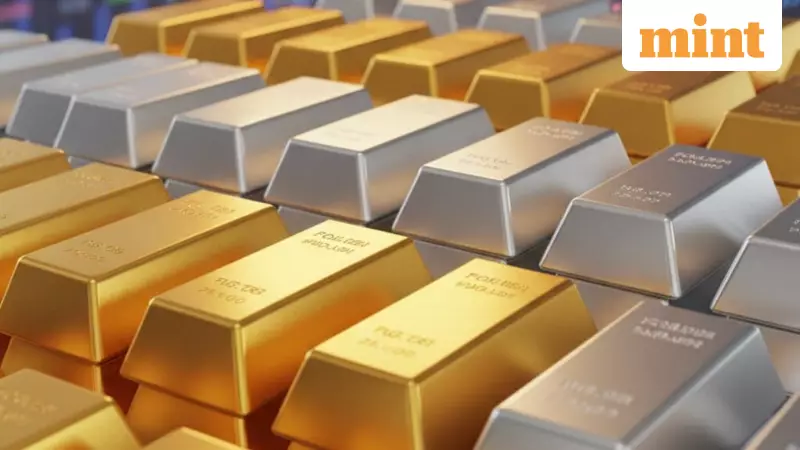
Gold prices achieved a monumental breakthrough, surging decisively above the $5,000-per-ounce threshold for the first time in history. This extraordinary ascent extends what has become a historic bull run, fundamentally driven by rising global tensions, fragile macroeconomic conditions, and a growing erosion of confidence in traditional fiat currencies.
Meanwhile, silver, often characterized as the more volatile counterpart to gold, moved in perfect tandem with the rally. Spot silver prices experienced a dramatic jump of over 5% in a single session, ultimately touching a new all-time peak of $108.60 per ounce. This synchronized surge underscores the broad-based demand for tangible assets in the current financial landscape.

The Driving Forces Behind the Record Rally
The powerful rally in precious metals is firmly underpinned by a potent combination of geopolitical shocks and profound policy uncertainty. Several critical factors are converging to create this perfect storm for gold and silver appreciation:
- Geopolitical Flashpoints: Ongoing military conflicts in Ukraine and Gaza, coupled with recent aggressive actions by the United States against Venezuelan President Nicolás Maduro, have significantly heightened global risk aversion. Furthermore, former US President Donald Trump's assertive trade stance has rattled international markets, particularly following his threat to impose a 100% tariff on Canada should it pursue a trade agreement with China.
- Macroeconomic Pressures: Beyond immediate geopolitical concerns, broader economic forces are exerting substantial influence. Persistently elevated inflation levels, a weakening US dollar, sustained and aggressive purchasing programs by central banks worldwide, and growing market expectations for interest rate cuts by the US Federal Reserve later this year have collectively strengthened the fundamental case for holding precious metals.
In this highly volatile environment, gold and silver have increasingly emerged as the preferred shelters for capital preservation, especially when traditional financial assets like stocks and bonds struggle to provide stability and reliable returns.
Portfolio Implications of Record Precious Metal Prices
According to analysis from Anand Rathi, the dramatic surge in precious metals reflects a deeper, structural transformation within the global economic order. The brokerage firm emphasizes that economic outcomes are now being driven less by principles of market efficiency and more by the dynamics of power politics. In this new paradigm, trade sanctions, technology restrictions, and acute energy security concerns are increasingly replacing the free-flowing movement of global capital that characterized previous decades.
"Gold has fundamentally transitioned from being a cyclical inflation hedge to becoming a form of geopolitical insurance in an increasingly uncertain world," Anand Rathi stated. This shift highlights how persistent fiscal deficits and aggressive balance-sheet expansion by major central banks have systematically eroded long-standing trust in fiat currencies.
This new financial regime is actively challenging traditional portfolio assumptions. Conventional assets like cash and bonds tend to lose purchasing power when real interest rates remain negative for extended periods, while the stability of major currencies can no longer be taken for granted. Anand Rathi pointed out that gold's primary role in contemporary portfolios is not necessarily to maximize returns, but rather to act as crucial balance-sheet protection during periods of acute market stress and systemic uncertainty.

The Strategic Role of Central Banks
Central banks around the world have powerfully reinforced this trend. Official sector gold purchases have remained structurally positive since 2010, with acquisitions accelerating meaningfully after 2018 and again following the events of 2022. The brokerage noted that reserve managers are increasingly diversifying their holdings away from traditional reserve currencies like the US dollar and the euro. This strategic shift is motivated by rising concerns over currency concentration risks and the potential weaponization of foreign exchange reserves in geopolitical disputes.
"Gold carries absolutely no counterparty risk and remains entirely outside the control of any single sovereign nation or international payment system," Anand Rathi explained, detailing why official allocations to gold have continued to rise steadily even at these historically elevated price levels.
Long-term historical data further supports gold's strategic value, demonstrating that it typically exhibits low or even negative correlation with equity markets during significant corrections. While equities generally deliver superior long-term returns, gold has historically played a vital role in stabilizing and preserving portfolio value when market volatility spikes unexpectedly. Consequently, Anand Rathi stressed that gold functions most effectively as a strategic, long-term allocation within a diversified portfolio, rather than as a short-term trading asset.
Understanding the Distinct Nature of Silver
While gold primarily plays a defensive role in portfolios, silver operates with a distinctly different profile. Anand Rathi describes silver as a hybrid asset—part monetary metal and part industrial commodity—characterized by much higher volatility and a stronger intrinsic linkage to global economic cycles.
Nearly 60% of global silver production occurs as a by-product of mining base metals such as copper, zinc, and lead. This unique supply dynamic makes silver production relatively inelastic and heavily dependent on investment cycles within the base-metals sector. This dependency amplifies price swings during reflationary economic phases, when industrial demand picks up momentum.
The brokerage indicated that the recent explosive surge in silver was primarily driven by renewed reflation expectations, falling real interest rates, and a significant catch-up rally after years of notable underperformance relative to gold. However, analysts caution that this relative catch-up phase is now largely complete.
"Silver's next major price movement will depend not on valuation metrics alone, but on sustained global economic growth and robust industrial demand," Anand Rathi said, pointing to transformative themes such as solar power expansion, electric vehicle adoption, and broad-based electrification as the key fundamental drivers for future silver demand.
Historically, silver has demonstrated a tendency to outperform other assets in clear risk-on environments, while often underperforming during periods of acute market stress. Its higher volatility and positive correlation with equity markets render it unsuitable as a pure defensive hedge. Instead, silver is often viewed as attractive for more tactical, satellite allocations within a broader investment strategy, aimed at capturing growth during economic expansions.
Disclaimer: The views and investment recommendations expressed above are those of individual analysts or broking companies, and not of Mint. We strongly advise investors to consult with certified financial experts and conduct thorough due diligence before making any investment decisions.