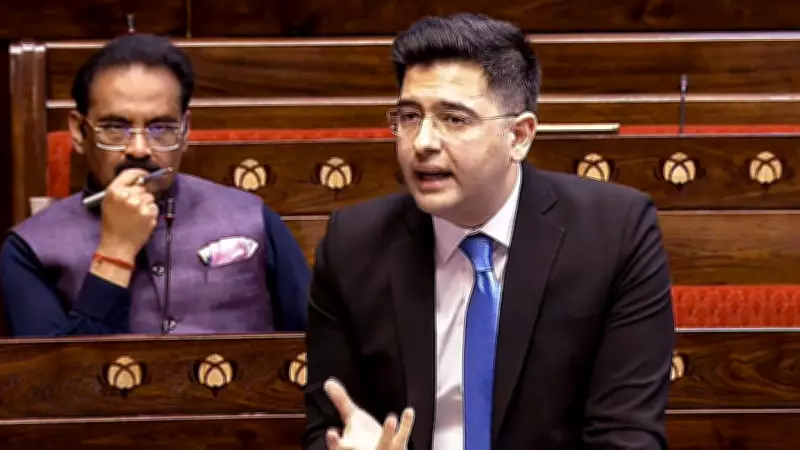
Raghav Chadha Advocates for Legalizing Cryptocurrency and Stablecoins in India
Rajya Sabha MP Raghav Chadha has made a compelling plea for the Indian government to legalize virtual digital assets (VDAs), including cryptocurrency and stablecoins. He emphasized that the current lack of a clear regulatory framework is forcing Indian investors and crypto companies to relocate their operations to offshore jurisdictions.
Taxation Without Legal Recognition
During the Budget discussion in the Upper House of Parliament on February 9, Chadha pointed out a critical contradiction in India's approach. "India taxes VDAs like they are legal. But regulate it like they are illegal," the Aam Aadmi Party MP stated. He highlighted that while the government imposes a 30% capital gains tax on crypto profits and a 1% TDS on transactions, it provides no legal recognition, investor protection, or dedicated anti-money laundering (AML) framework for these assets.
All profits from trading or selling cryptocurrency in India are subject to taxation, regardless of how long an investor has held the asset. This means every time an individual realizes a gain on crypto, they are legally obligated to pay the taxes imposed by India, despite the ambiguous legal status of the assets themselves.

The High Cost of Regulatory Uncertainty
Chadha detailed the significant economic impact of this regulatory uncertainty. He revealed that approximately 12 crore Indians are now using overseas platforms for crypto trading, with a staggering ₹4.8 lakh crore in virtual digital assets having moved offshore. Furthermore, 73% of India's crypto trading volume has shifted to foreign exchanges, and nearly 180 Indian crypto startups have relocated to regions such as Dubai, Singapore, and Malaysia.
"The answer is: compliance in India. Give VDAs clear asset class status in India," Chadha asserted during his speech. He argued that introducing a clear domestic regulatory sandbox with robust AML guardrails would encourage VDA activity to return to India, improve compliance, safeguard investors, and potentially boost annual tax revenue by ₹15,000–20,000 crore.
Chadha concluded with a powerful message: "Let us not fear innovation, let us regulate it. Prohibition is not protection, Regulation is protection."
Industry Response to Chadha's Remarks
Responding to Chadha's call for action, Nischal Shetty, founder of the crypto exchange WazirX, acknowledged that India has implemented some safeguards for the virtual digital asset ecosystem. The Financial Intelligence Unit (FIU) has been overseeing compliance and user protection in recent years. However, Shetty noted that to enhance compliance, the government must address key issues such as the ban on loss set-offs, high trading taxes, and the 1% TDS regime, which are driving investors offshore and reducing tax collections linked to transaction flow monitoring.
Shetty explained, "While strengthening customer protection has been a priority for the government, the move has not served the purpose optimally because it has led investors to externalize risk by moving activity outside India’s jurisdictional safeguards, while the country loses hundreds of crores of taxes."
Meanwhile, SB Seker, Binance's APAC head, observed that countries worldwide are increasingly establishing clear rules for digital assets. These regulations encourage innovation while ensuring strong compliance, helping nations emerge as global crypto hubs. "As India emerges as a key growth engine of the Global South, the opportunity lies in shaping guardrails that protect consumers, retain talent, and enhance value creation," Seker said. He emphasized that continued dialogue and cooperation between policymakers and the industry are essential to achieving these goals while ensuring a secure and transparent market environment.
The debate underscores a growing consensus that India must balance innovation with regulation to harness the potential of virtual digital assets, prevent capital flight, and secure its position in the global digital economy.