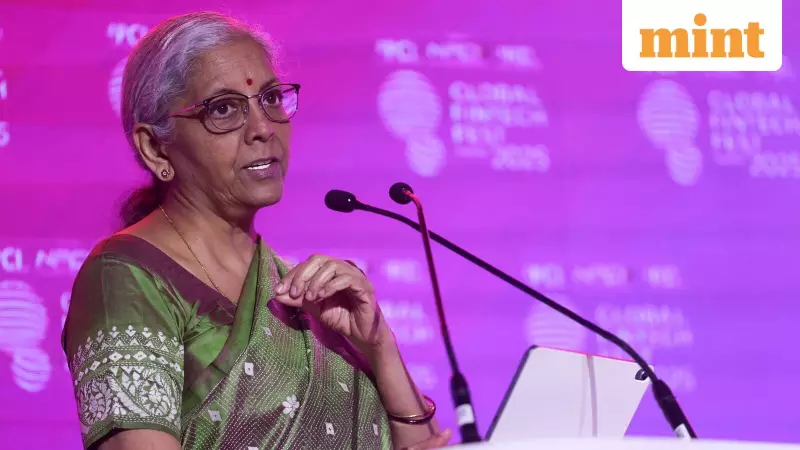
With merely seven days remaining until Finance Minister Nirmala Sitharaman unveils the Union Budget 2026 in Parliament on Sunday, February 1, anticipation is building across India's financial technology landscape. Industry stakeholders and economic observers are keenly awaiting the government's strategic roadmap for bolstering the nation's economy, with particular focus on the rapidly evolving fintech ecosystem that has redefined transactional norms.
The Digital Payments Transformation: From Convenience to Expectation
Analysts highlight that India's enthusiastic adoption of digital payments signifies a profound shift in how economic exchanges are conducted nationwide. What initially emerged as a mere convenience has now matured into a standard expectation across diverse daily scenarios—spanning local retail outlets, public transportation networks, healthcare facilities, and educational institutions. This remarkable transition has been fueled by several interconnected factors.
The Unified Payments Interface (UPI) has provided a cost-effective and interoperable framework that facilitates seamless transactions. Simultaneously, widespread smartphone penetration, affordable internet accessibility, and a regulatory environment that adapts to innovation have collectively accelerated this digital revolution. These elements have cultivated user trust, encouraged formalization of economic activities, and stimulated substantial growth within India's digital payments domain.

Industry Voices: Policy Recommendations for Sustained Growth
Naren Agarwal, CEO of Wealth1, emphasizes that targeted budgetary interventions could significantly amplify sectoral momentum. He advocates for enhanced access to growth capital, tax incentives specifically designed for fintech innovation, rationalization of Goods and Services Tax (GST) on technology-driven financial services, and continued governmental backing for digital public infrastructure like UPI, Account Aggregator, and DigiLocker.
Agarwal further notes that policy support for artificial intelligence, data analytics, cybersecurity frameworks, and regulatory sandboxes will empower fintech companies to scale responsibly. Such measures would deepen financial inclusion efforts and solidify India's standing as a global hub for digital financial services.
The Call for Policy Continuity and Reliability
Richika Dadheech, Founder and Managing Director of FiatPe, underscores the fintech industry's desire for policy continuity in Budget 2026, coupled with heightened emphasis on long-term sustainability. While zero Merchant Discount Rate (MDR) policies have crucially accelerated adoption and inclusion, Dadheech suggests that differentiated economics for high-volume use cases could sustain infrastructure investments without burdening smaller merchants.
As transaction volumes escalate, reinforcing payment resilience, cybersecurity protocols, and fraud prevention mechanisms becomes increasingly vital. Dadheech observes that technology—particularly artificial intelligence—is subtly revolutionizing fintech operations by enabling real-time fraud detection, comprehensive system monitoring, and operational efficiency at scale. Ultimately, trust in financial services hinges on dependable systems supported by human accountability. The forthcoming phase of fintech expansion, she contends, will be characterized not merely by reach or speed, but by ground-level reliability and user confidence during critical moments.
Four Core Expectations to Elevate Fintech Ecosystem
Rohith Reji, Co-Founder and CEO of Neokred, posits that India stands at a pivotal juncture where the "India Stack" could transcend being a foundational element to become a global benchmark. He outlines four primary expectations for the upcoming budget:

- Strengthen Embedded Finance Infrastructure: The government has excelled in developing Digital Public Infrastructure (DPI). Budget 2026 should introduce policies that further democratize banking-as-a-service. Tax incentives for startups creating indigenous middleware would enable even the smallest non-banking entities to offer sophisticated financial products, thereby decentralizing credit and payment systems.
- Bridge MSME Credit Gap via Account Aggregator Framework: Micro, Small, and Medium Enterprises (MSMEs) constitute an indispensable component of India's economy, yet credit access disparities persist. Mandates offering subsidies to integrate the Account Aggregator (AA) framework across all financial touchpoints are essential. By normalizing data-backed lending, India can shift away from collateral-heavy requirements, allowing fintechs to precisely serve the "missing middle" segment.
- Ensure Regulatory Clarity: Expanding regulatory sandboxes with focus on "green fintech" and AI-driven compliance can significantly streamline operations. A simplified GST structure for fintech service providers would enhance operational efficiency and foster cross-border collaborations.
- Incentivize Financial Literacy and Security: As fintechs scale, security becomes paramount. Establishing a dedicated fund for cybersecurity research and development, alongside digital literacy programs, would ensure that the "next 500 million" users entering the formal economy do so with confidence and safety.
The collective insights from industry leaders reflect a nuanced understanding of the challenges and opportunities within India's fintech sector. As Budget 2026 approaches, these recommendations highlight the need for balanced policies that encourage innovation while ensuring stability, security, and inclusive growth across the digital financial landscape.