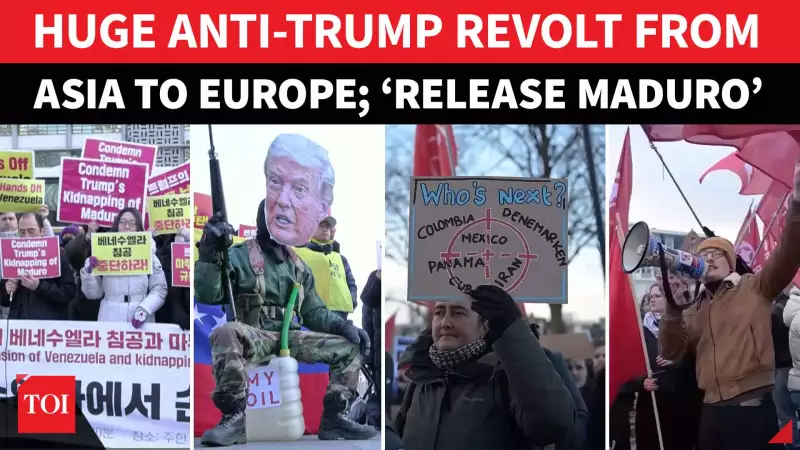
In a dramatic escalation of international tensions, widespread protests have erupted across the globe following the seizure of Venezuelan leader Nicolás Maduro by United States forces. The operation, which took place recently, has ignited a fierce backlash, with demonstrators from Seoul to Tehran condemning the action as a blatant attack on national sovereignty.
Protests Span Continents
The global reaction was swift and furious. From the streets of Seoul in Asia to Amsterdam in Europe, and from Tehran in the Middle East to New York in the United States itself, crowds gathered to voice their anger. The common thread uniting these diverse protests is a profound condemnation of the US operation. Protesters and governments alike are labeling it a severe violation of international law and an unacceptable infringement on Venezuela's sovereignty.
Chants and placards highlighted fears that this move by Washington sets an extremely dangerous precedent. The core concern resonating worldwide is that this action could pave the way for future US military interventions in other sovereign nations, with protesters warning that Venezuela may not be the last country to face such a fate. The transfer of Maduro to US custody has only amplified these anxieties, putting a spotlight on what many see as Washington's overreaching foreign policy.

International Condemnation and Warnings
The fallout is not limited to street demonstrations. The operation has drawn sharp criticism from several national governments and high-profile leaders. Chinese President Xi Jinping has reportedly issued warnings to the US administration, criticizing it for "acting like the world's cop." Meanwhile, reactions from other quarters suggest a significant geopolitical rift is widening.
Key developments and statements adding fuel to the fire include:
- Iran's Supreme Leader Ali Khamenei making contingency plans amid US threats.
- Venezuelan officials, including Maduro's son, fiercely denouncing what they call traitors.
- Ukrainian President Volodymyr Zelensky drawing parallels to Russia's actions.
- Allies of the Maduro government warning of the dire economic consequences, highlighting the US interest in Venezuelan oil.
These reactions underscore a deep-seated global suspicion about US motives, with many pointing to control over oil resources as a key driver behind the intervention.
A World on Edge
The capture of Nicolás Maduro has effectively opened a new front in global diplomacy, one marked by distrust and the potential for further conflict. The widespread protests signify more than just support for Maduro; they represent a fundamental challenge to a world order where a single power can unilaterally decide to depose a foreign leader. As Maduro remains in US custody, the international community watches with bated breath. The critical questions now are about the long-term implications: Will this action deter other nations, or will it inspire further resistance? The streets of cities worldwide are already giving a loud, clear answer, and the echoes are unlikely to fade soon. The event, dated around January 6, 2026, has undoubtedly become a defining moment in contemporary international relations.