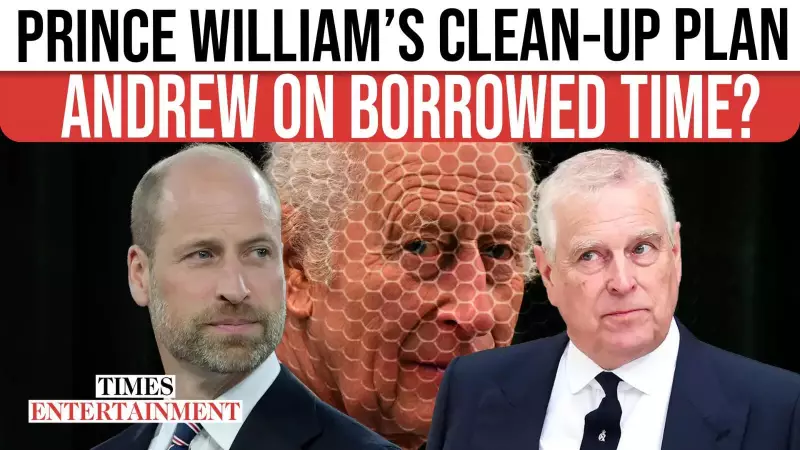
In a bold move that could reshape the British monarchy, Prince William is reportedly preparing to permanently sideline his disgraced uncle, Prince Andrew. According to revelations in a new royal book, the future king is determined to act before the crown changes hands.
The Future King's Decisive Plan
Royal insiders claim that Prince William's objective is clear: to "clean the stables" of the monarchy. This metaphorical cleansing refers to addressing lingering controversies and reputational damage before he ascends to the throne. The primary focus of this effort is his uncle, Andrew Mountbatten-Windsor, the Duke of York, whose association with the late convicted sex offender Jeffrey Epstein has caused severe and lasting damage to the royal family's image.
The reports, which emerged on December 28, 2025, suggest that William's approach is not merely about temporary distancing but a permanent resolution. The Prince of Wales is said to view the Andrew situation as an unresolved crisis that threatens the institution's stability and public trust as it transitions to a new generation.

Mounting Pressure and a Tarnished Legacy
Prince Andrew's fall from grace has been spectacular and seemingly irreversible. Following his disastrous BBC Newsnight interview in 2019 and the subsequent civil sexual assault case, which was settled out of court, he was stripped of his military affiliations and royal patronages. He no longer uses the style "His Royal Highness" in an official capacity.
Despite this, his continued presence as a member of the royal family, residing at Royal Lodge in Windsor, is seen by many, including within the institution itself, as a persistent liability. The insider claims suggest that William believes the monarchy cannot move forward successfully with this shadow hanging over it. The plan is not just about protecting the crown's image but about actively rebuilding its foundation for a modern era.
What Could Happen Next?
The new royal book, cited as the source for these claims, hints at the potential next steps. While specific details are guarded, the path likely involves further formalizing Andrew's removal from all remaining aspects of royal life. This could mean:
- A more private life: Pushing for Andrew to retreat entirely from the public eye, potentially even relocating from his Windsor home.
- Financial restructuring: Addressing the ongoing question of who funds his lifestyle and legal bills, which remains a point of public contention.
- Ceremonial exclusion: Ensuring his absence from future state and family events that are in the public domain, solidifying his non-working status.
The move is framed not as a personal vendetta but as a necessary, strategic decision for the survival and relevance of the monarchy. William is portrayed as a moderniser who understands that public sentiment, especially among younger generations, will not tolerate unresolved scandals. His actions are interpreted as preparing the ground for a more transparent and accountable institution when he eventually becomes King.
This reported determination from the heir to the throne signals a significant shift in how the royal family manages its internal crises. It moves from a strategy of quiet containment to one of active, decisive management. The message is clear: the reign of King Charles III and the future reign of King William V will be defined by a break from the past, and Prince Andrew's permanent removal is positioned as the first, essential step in that process.