White House Press Secretary Declines to Rule Out Military Draft for Potential Iran Conflict
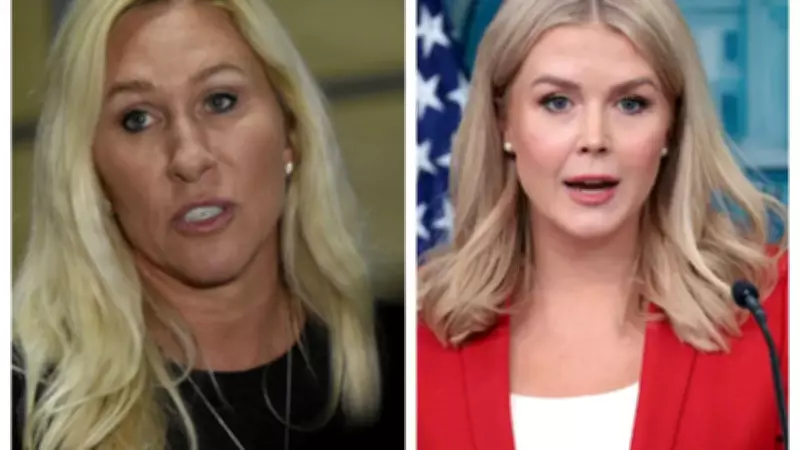
White House Press Secretary Karoline Leavitt has ignited significant controversy by refusing to categorically dismiss the possibility of American "boots on the ground" in Iran during a recent Fox News interview. This ambiguous stance has provoked a strong reaction from the anti-war faction within the Republican Party, most notably from former Georgia Representative Marjorie Taylor Greene.
Leavitt's Controversial Remarks on Military Options
When directly questioned by Fox News host Maria Bartiromo about the potential for a military draft, Leavitt offered a non-committal response that has raised alarms. "President Trump wisely does not remove options off of the table," Leavitt stated. She elaborated further, acknowledging public anxiety while maintaining strategic ambiguity: "Mothers out there are worried that we're going to have a draft, that they're going to see their sons and daughters get involved in this. I know a lot of politicians like to do that quickly, but the president as commander-in-chief wants to continue to assess the success of this military operation. It's not part of the current plan right now, but the president, again, wisely keeps his options on the table."
Marjorie Taylor Greene's Furious Backlash
The interview clip prompted an immediate and fiery response from Representative Marjorie Taylor Greene, who represents the growing isolationist wing of the GOP. Greene expressed outrage that Leavitt did not outright reject the notion of conscription. "How about the answer is NO DRAFT AND NO BOOTS ON THE GROUND because we campaigned on NO MORE FOREIGN WARS OR REGIME CHANGE!!! Liars every single one of them! Not my son, over my dead body!!!!!" Greene declared in a social media post.

Greene went further, criticizing fellow Republicans who she claims support military escalation. "By the way a bunch of psycho Republicans want to not only draft your sons but your daughters too!!!!! Send Lindsey Graham, Mark Levin, and Laura Loomer and ALL the murderous blood thirsty maniacs that support this America LAST WAR," she continued, suggesting that hawkish politicians should be sent to fight instead of drafting citizens.
Historical Context of the US Military Draft
A military draft, formally known as conscription, is a governmental mandate requiring individuals—typically young men—to serve in the armed forces regardless of their voluntary status. The United States last implemented a draft during the Vietnam War era, with conscription officially ending in 1973. For a draft to be reinstated, Congress would need to pass specific legislation, which would then require presidential approval. This historical context adds weight to the current political debate, as the prospect of renewed conscription represents a significant departure from recent military policy.
Broader Geopolitical Tensions
This domestic political controversy unfolds against a backdrop of escalating tensions in the Middle East. Recent developments include Iran firing missiles at Israel under the leadership of new Supreme Leader Mojtaba Khamenei, creating a volatile regional situation. Additionally, there are reports of a growing rift between the US and Israel regarding response strategies to Iranian aggression, with the White House reportedly surprised by Israeli attacks on oil depots. Iran has issued warnings of retaliation, and video evidence shows significant damage to Bahrain's largest BAPCO oil refinery following Iranian strikes, illustrating the expanding conflict zone.
Greene concluded her criticism with a pointed political demand: "They tried to add women to the draft to selective service multiple times while I was in Congress. Trump and Republicans need to guarantee that there will be NO DRAFT AND NEVER DRAFT OUR DAUGHTERS." This statement highlights the ongoing legislative debate about gender equality in military conscription and underscores the deep divisions within the Republican Party regarding foreign military intervention.