

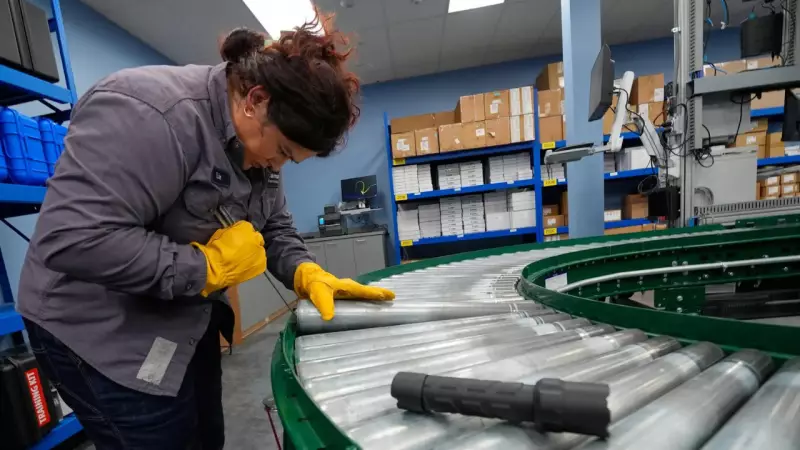
In a strategic move to combat a deepening national crisis, retail behemoth Walmart is aggressively building its own army of skilled technicians. With the United States grappling with a severe shortage of tradespeople, the company is overhauling internal training to ensure its vast network of stores and distribution centres stays operational, according to an Associated Press report.
The Growing Void in America's Workforce
The world's largest retailer, which is also America's biggest private employer, has been forced to act as the pool of qualified maintenance workers continues to shrink. These technicians are the backbone of daily operations, handling everything from repairing conveyor belts and refrigeration units to managing complex electrical and mechanical systems. The labour shortage, analysts note, stems from a potent mix of a wave of retirements and a significant slowdown in immigration that began during the pandemic. The situation has been further tightened by former President Donald Trump's aggressive deportation policies.
The problem is particularly acute in skilled trades. A stark analysis by McKinsey & Company, covering 12 trade categories like welders, carpenters, and maintenance technicians, projects a dire imbalance: for every one net new worker entering these fields between 2022 and 2032, there will be 20 job openings. This high churn could cost companies over $5.3 billion annually just in hiring and training expenses, the consultancy warned.

Walmart's Hands-On Solution: From Operator to Expert
Walmart's revamped, tuition-free training programme, first launched in the Dallas-Fort Worth area in spring 2024, is a direct response. It has since expanded to Vincennes, Indiana, and Jacksonville, Florida. The curriculum blends classroom theory with practical, hands-on instruction in critical areas like HVAC, electrical work, and general maintenance.
The initiative is already changing lives. Take the case of Liz Cardenas, 24. She joined Walmart in May 2023 as an automation equipment operator at a distribution centre in Lancaster, Texas, simply monitoring conveyor belts. After seizing the training opportunity, she now fixes those systems when they break down. Her story highlights the programme's success: her hourly pay has nearly doubled to $43.50. "I was able to move out of my parents' house," Cardenas said. "I have my own apartment. I was able to get a car, and I'm able to give more to my 401(k)."
As of mid-November, nearly 400 employees had graduated from the programme. Impressively, all 108 associates from the initial pilot batch secured technician roles, commanding an average pay of around $32 per hour. Walmart has set an ambitious target to train 4,000 workers by 2030.
A Broader Industry Push and Persistent Challenges
Walmart is not alone in this battle. In June, the Business Roundtable—a lobbying group for about 150 major US CEOs—launched a new initiative co-led by home improvement chain Lowe's to address the skilled trades gap. Their strategy includes outreach to schools to raise awareness about trade careers. "While technology continues to evolve, it cannot replace plumbers, electricians, construction workers, maintenance and repair pros, or other tradespeople," emphasised Lowe's chairman and CEO Marvin Ellison.
Lowe's itself started a 90-day online training scheme in 2022 and has invested $43 million since 2023 through its charitable arm to support technical colleges and non-profits in recruiting and training skilled workers.
However, experts like Mervin Jebaraj of the University of Arkansas's Walton College of Business caution that while corporate programmes help, they are unlikely to fully close the gap, especially with restrictive immigration. "For as long as somebody physically needs to fix this, the shortage will persist," he stated bluntly. "We don't have enough people."
Walmart CEO Doug McMillon pointed to a fundamental awareness issue, telling AP, "Most Americans probably don't know what a tech makes that helps take care of our stores and clubs."

The urgency of filling these roles is crystal clear for operations. R.J. Zanes, vice-president of facility services for Walmart and Sam's Club in the US, highlighted the high stakes, especially during peak seasons like the holidays. A single refrigeration failure at a store can lead to $300,000 to $400,000 in losses from spoiled goods. "We have to ensure that we've got the right skills there to do preventative maintenance," Zanes said, "and when we do have a breakdown, get it back up as fast as possible to minimise downtime."
As American businesses face higher costs from tariffs and AI investments, the race to build and retain a reliable skilled workforce has become a critical operational and financial imperative, with Walmart's large-scale training push serving as a notable corporate blueprint.





