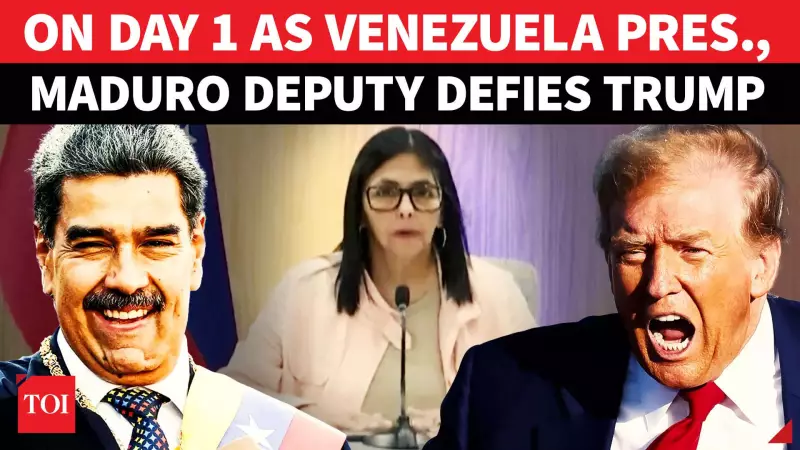
In a bold opening statement, Delcy Rodríguez, sworn in as Venezuela's interim president, directly challenged the United States and its leader Donald Trump. On her very first day in office, January 7, 2026, Rodríguez dismissed Washington's assertions of influence over Caracas, declaring that no foreign power dictates Venezuela's fate.
A Defiant Stance Amidst Crisis
Rodríguez's defiant remarks came just hours after she took the oath of office. This swift transition of power was triggered by the dramatic capture of former President Nicolás Maduro by U.S. military forces. The event has plunged the region into a severe diplomatic crisis, with escalating tensions centered on Venezuela's sovereignty and its massive reserves of oil.
President Donald Trump has publicly stated his intention to access Venezuelan crude oil, framing it as a matter of U.S. strategic national interest. This declaration has set the stage for a high-stakes confrontation. In her address, Rodríguez walked a delicate line, mixing firm defiance with cautious openness to dialogue, insisting that her country is not under any external control.

The Oil at the Heart of the Conflict
The core of the dispute lies in Venezuela's vast energy resources. Trump has claimed that Caracas will be compelled to turn over millions of barrels of oil to the United States. Rodríguez's immediate rejection of this claim underscores the deep conflict over who rightfully controls these assets. The situation presents a major test for the new interim government, which must navigate intense international pressure while attempting to assert its authority domestically.
Regional and Global Repercussions
The capture of Maduro and the swift installation of an interim president have sent shockwaves beyond the Americas. Global powers are closely watching the unfolding scenario. Reports indicate that China's leader, Xi Jinping, has warned Trump against acting like a "world cop," exposing what Beijing sees as Washington's underlying motive: securing oil. Meanwhile, reactions within the U.S. have been sharply divided, adding another layer of complexity to an already volatile international standoff.
The coming days are critical. Rodríguez's government must stabilize the nation internally while facing formidable external challenges. The world waits to see if this bold defiance will lead to further escalation or pave the way for a negotiated solution concerning Venezuela's future and its precious natural resources.