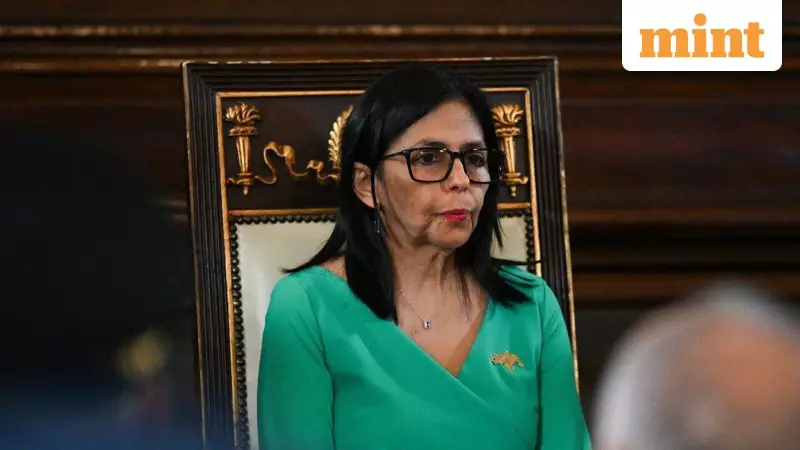
Venezuela's political landscape has been thrown into unprecedented turmoil following the dramatic capture of former leader Nicolás Maduro. In his stead, Acting President Delcy Rodríguez now navigates a treacherous path for survival, attempting the near-impossible: satisfying the demands of US President Donald Trump while preventing the hardline remnants of the socialist regime from turning against her.
A Sudden Shift from Defiance to Diplomacy
The immediate aftermath of the raid that snatched Maduro and his wife, Cilia Flores, from their bedroom on Saturday saw Rodríguez strike a defiant tone. A committed socialist, she denounced the operation as an imperialist attack and insisted Maduro remained the nation's legitimate leader. However, by Sunday, her public stance had shifted markedly. Leading a cabinet meeting as the acting head of state, Rodríguez extended an olive branch to Washington, Venezuela's long-time adversary.
"We prioritize moving toward balanced and respectful international relations between the United States and Venezuela," Rodríguez stated, framing her approach on principles of "sovereign equality and noninterference." This rapid pivot underscores the fragile nature of her interim leadership, caught between intense external pressure and the threat of internal factional collapse.

The Trump Ultimatum: Oil for Survival
President Trump's conditions for Venezuela are clear, albeit vague on democratic reforms. The primary focus is on ramping up the country's vast oil production, with American energy firms positioned to lead the charge. US officials have additionally demanded an end to narcotics flows through Venezuelan territory and the cessation of support for US adversaries.
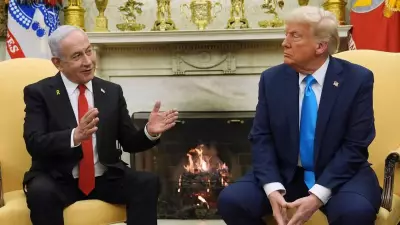
Trump issued a stark warning to the new leader, stating that if Rodríguez fails to deliver, "she will face a situation probably worse than Maduro." The US strategy involves a military encirclement of Venezuelan Caribbean waters, crucial for oil exports, while coaxing the remnants of Maduro's government to hold together and facilitate the return of American companies. Analysts note that pressing for democratic transition, once a cornerstone of US policy, appears to have been deprioritized for now.
Internal Perils: The Revolutionary Hardliners
Rodríguez's conciliatory moves towards Washington carry immense risk domestically. Key power brokers like Interior Minister Diosdado Cabello and Defense Minister Vladimir Padrino, who command the nation's security forces, view surrender to the US as the ultimate betrayal. For these hardline leftists and self-styled anti-imperialists, any concession is tantamount to treason.
"She's sandwiched between U.S. firepower and Venezuelan firepower," observed David Smilde, a Tulane University professor specializing in Venezuelan politics. "She can't kowtow too much." The challenge is compounded by the need to reform oil industry laws from the Chávez era, which granted the state majority control. Revising these regulations to attract US investment would require approval from the regime-controlled National Assembly, a body deemed illegitimate by the US, and would threaten lucrative contracts enjoyed by the military under PdVSA.
A Brother's Loyalty and Street-Level Repression
Rodríguez was formally sworn in as acting president on Monday at the National Assembly, led by her brother, Jorge Rodríguez, Maduro's former top negotiator with the US. While calling for national unity, Jorge Rodríguez vowed not to abandon socialist principles and declared his main priority was to "bring back my brother, Nicolás Maduro, my president."
Simultaneously, the regime intensified repression. A new decree authorized security forces to arrest dissidents accused of supporting US intervention. Checkpoints manned by masked police and paramilitaries sprung up across Caracas, with at least 14 journalists detained. This crackdown signals that, despite Maduro's absence, his repressive apparatus remains firmly in place, creating a confusing and volatile atmosphere for citizens.

As retired political science professor Carlos Romero in Caracas noted, "There's a side that's insisting the regime and the revolution will continue, and then there are those who want its demise... We are facing very difficult days ahead." Delcy Rodríguez's ability to walk this political tightrope will determine not only her own fate but the immediate future of a nation in crisis.