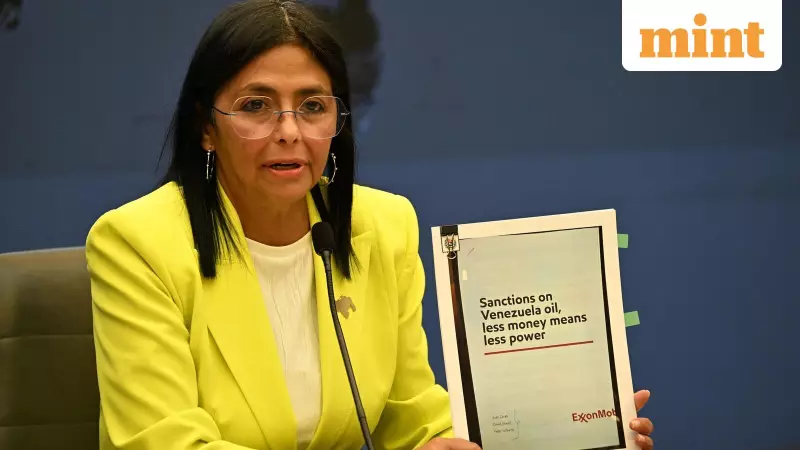
In a significant shift from earlier defiant rhetoric, Venezuela's newly appointed acting president, Delcy Rodriguez, has publicly invited the United States government to collaborate on a shared agenda. This move comes after a tumultuous weekend that saw former President Nicolas Maduro captured by US forces and the Venezuelan Supreme Court naming Rodriguez as the interim leader on Sunday.
A Sudden Call for Peaceful Cooperation
Through a detailed post on Instagram, Delcy Rodriguez addressed both the world and the United States directly. She reaffirmed Venezuela's commitment to peace and peaceful coexistence, expressing a national aspiration to live without external threats. Rodriguez emphasized building global peace by first ensuring peace within nations.
Her statement contained a direct invitation: "We invite the US government to collaborate with us on an agenda of cooperation oriented towards shared development within the framework of international law." She framed this appeal as a continuation of Nicolas Maduro's message, stating that the peoples of the region deserve dialogue, not war. This outreach is viewed as a notable departure from her initial reaction to Maduro's capture, which she had condemned as an "atrocity."

Trump's Demands and the US Stance
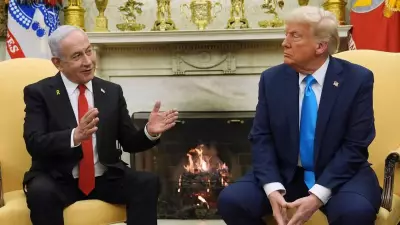
Rodriguez's conciliatory message followed stern warnings from US President Donald Trump. Aboard Air Force One, Trump stated that Rodriguez could "pay a very big price" if she did not align with US demands. He reiterated that the US intends to "run" Venezuela until a proper transition occurs, demanding "total access" to the country's resources, from major oil operations to basic infrastructure, purportedly to aid in rebuilding.
However, US Secretary of State Marco Rubio later clarified that the US does not plan to govern Venezuela directly. Instead, the strategy involves enforcing an "oil quarantine" to influence policy from the outside. Meanwhile, Nicolas Maduro and his wife, Cilia Flores, remain in US custody. They are scheduled for their first court appearance on Monday before a federal court in New York's Southern District, facing charges related to narco-terrorism and drug trafficking conspiracy.
Internal Rifts and a Quiet Capital
Amidst the international drama, signs of potential internal conflict emerged within Venezuela's ruling party. A lawmaker from the United Socialist Party of Venezuela (PSUV), Maduro Guerra, warned in an audio message about possible betrayal, hinting at an internal conspiracy while urging party unity. On the ground, the capital city Caracas presented an unusually quiet scene on Sunday, with minimal traffic and many businesses closed, even as government ministers continued in their posts.
The situation remains fluid, with the new acting president extending an olive branch while navigating immense pressure from the United States and potential instability within her own political movement. The coming court appearance of Maduro will be a critical next step in this high-stakes geopolitical standoff.