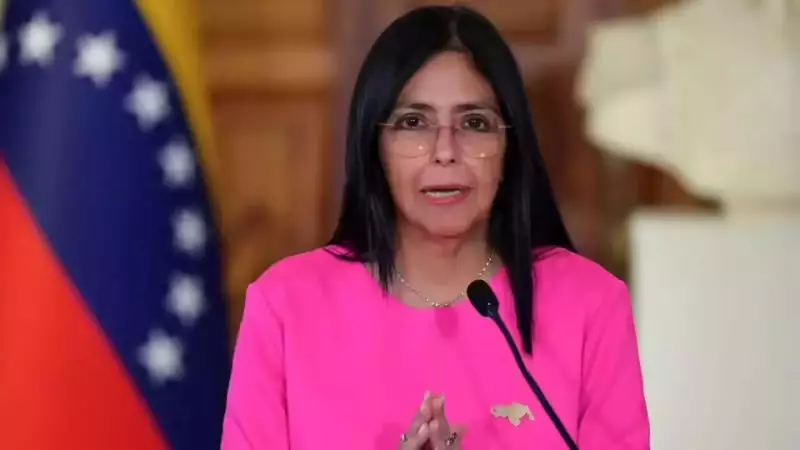
Venezuela's interim leader, Delcy Rodriguez, has issued a forceful rejection of claims by the United States that it is now in control of the South American nation. The statement comes in the wake of a dramatic US military operation that resulted in the capture of President Nicolas Maduro.
Defiance in the Face of US Claims
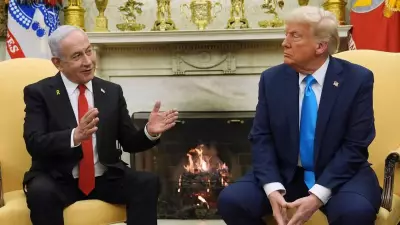
Speaking on state television on Tuesday, Rodriguez asserted Venezuela's sovereignty. She directly countered statements made by US President Donald Trump, who declared Washington was now "in charge" and that Venezuela would hand over millions of barrels of oil.
"The government of Venezuela is in charge in our country, and no-one else," Rodriguez stated emphatically. This declaration was made just three days after US special forces conducted a raid in Caracas, the Venezuelan capital. The operation led to the detention of President Nicolas Maduro and his wife, Cilia Flores. Both have been transported to the United States to face trial.

A Nation in Mourning
Striking a sombre tone for the domestic audience, Rodriguez announced a week of national mourning. She paid tribute to those killed during the US assault, honouring them as defenders of the nation.
"We are a people that does not surrender, we are a people that does not give up," she declared, referring to the victims as "martyrs" of the American attacks. Venezuelan authorities confirmed that the raid resulted in the deaths of at least 23 members of the armed forces, including five generals. Cuba, a close ally of Venezuela, reported that 32 Cuban military personnel also died in the operation.
While Venezuela has not released an official civilian death toll, the country's attorney general indicated there were "dozens" of combined civilian and military casualties.
Unrest and Uncertainty in Caracas
The political upheaval has triggered mixed reactions within Venezuela. In Caracas, thousands of supporters of Nicolas Maduro marched through the streets, demanding his immediate release. They voiced their continued loyalty to the detained leader.
Conversely, while a significant portion of the population opposes Maduro's rule, widespread public celebration of his downfall has been muted. Analysts suggest this is largely due to a pervasive fear of state repression and the uncertain future that lies ahead.
The country's constitution mandates that once Maduro is formally declared absent, new elections must be held within 30 days. This sets the stage for a period of deep political uncertainty and potential instability for the oil-rich nation, as various factions vie for power in a post-Maduro Venezuela.