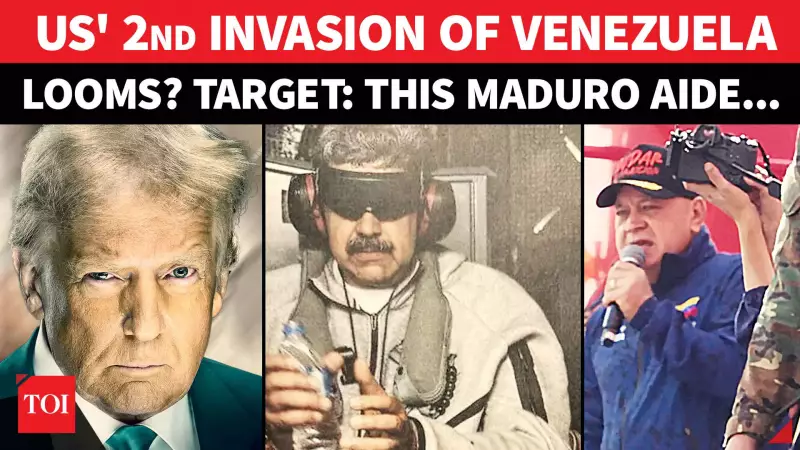
Behind the scenes in Washington, a high-stakes pressure campaign is unfolding against Venezuela's leadership. According to a Reuters report, the administration of former US President Donald Trump is actively pressuring key loyalists of Venezuelan leader Nicolás Maduro. The goal is to maintain a semblance of order while securing critical U.S. demands related to oil access, regional security, and influence in the South American nation.
Targeting the Inner Circle: A Warning for Cabello
Diosdado Cabello, Venezuela's powerful and hardline interior minister, has reportedly received a stark warning from U.S. officials. He has been told he could become a direct target for American action unless he agrees to cooperate with Washington's terms. This move signals a potential escalation in tactics, shifting focus to figures beyond Maduro himself. However, the U.S. strategy appears fraught with contradiction. Washington is simultaneously calculating how long it can depend on individuals like Cabello, who are accused of severe repression, simply to prevent the country from descending into total chaos.
Oil, Control, and Rising Street Tensions
The core of Trump's public demands remains centered on Venezuela's vast oil resources. The former president has openly called for millions of barrels of Venezuelan crude and has asserted that the United States should have control over the country's affairs. These bold claims, coupled with the behind-the-scenes maneuvering, are fueling unrest. On the streets of Caracas, public defiance is growing. The situation is further complicated by the existence of rival power centers within Venezuela's political and military structures.

A Nation on the Brink: Who Really Governs?
The combined pressures are leading to a critical and volatile question: who truly holds power in Venezuela today? With the Maduro government facing internal dissent, explicit U.S. threats, and a population growing increasingly defiant, the current state of affairs is described as a "fragile balance." Analysts and observers are now questioning how long this precarious situation can be sustained before it tips into a new phase of open conflict or dramatic political change. The threat of a second U.S. intervention, following past actions, looms large in the background of these tense negotiations and warnings.
The developments reported on January 7, 2026, underscore a continued aggressive posture from the Trump era towards Venezuela. The focus on figures like Diosdado Cabello indicates a strategy aimed at fracturing the regime's core. As demands for oil and control grow louder, the future of Venezuela hangs in a delicate and dangerous equilibrium, with its people caught in the middle of a geopolitical struggle for resources and influence.