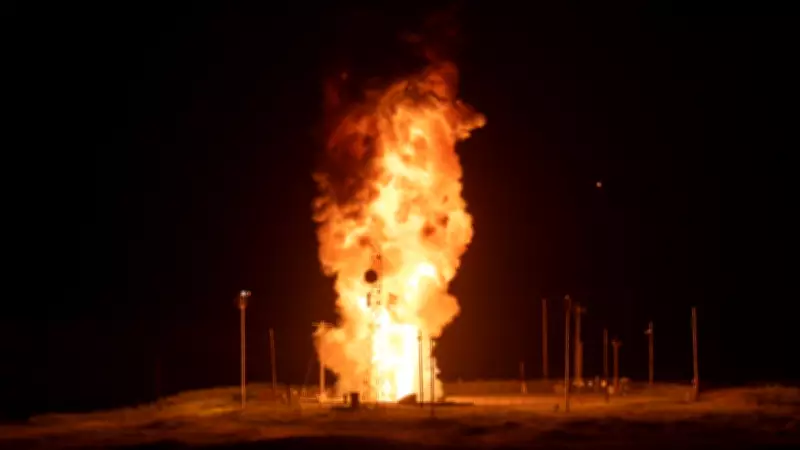
US Tests Nuclear-Capable Doomsday Missile Off California Coast Amid Iran War
The United States military has conducted a significant test launch of a nuclear-capable doomsday missile from the California coast, a move that underscores heightened strategic readiness as the conflict with Iran continues to escalate. This test, carried out in early March 2026, serves as a clear signal of American defense capabilities and global military posturing during a period of intense international tensions.
Details of the Missile Test
The test involved the launch of a sophisticated missile system designed for long-range nuclear deterrence, often referred to as a "doomsday" weapon due to its potential for catastrophic impact. Conducted off the coast of California, the exercise aimed to validate the missile's operational readiness and performance under simulated combat conditions. Military officials confirmed that the test was successful, with the missile meeting all key objectives, including accuracy and reliability in flight.
This launch is part of a broader series of defense initiatives by the US, aimed at maintaining a robust nuclear triad—comprising land-based, sea-based, and air-based systems—to ensure national security. The timing of the test is particularly notable, as it coincides with ongoing hostilities in the Middle East, where Iran has been engaged in military conflicts that have drawn international concern.

Context of the Iran War
The Iran war, which has been raging for several months, involves complex geopolitical dynamics and has led to widespread instability in the region. Iran's military actions, including missile strikes and proxy warfare, have prompted responses from global powers, with the US playing a central role in diplomatic and military efforts to contain the conflict. The test of the doomsday missile is seen as a strategic message to Iran and other adversaries, emphasizing the US's willingness to deploy advanced weaponry if necessary.
Experts suggest that this test could influence diplomatic negotiations, potentially hardening stances or serving as a deterrent to further escalation. The US Department of Defense has stated that such tests are routine and essential for maintaining a credible deterrent, but the timing amid the Iran war adds a layer of urgency and symbolism to the event.
Global Reactions and Implications
International reactions to the missile test have been mixed, with allies expressing support for US defense measures, while critics warn of the risks of escalating an already volatile situation. Key implications include:
- Increased Military Tensions: The test may heighten tensions with Iran and other nations, potentially leading to a cycle of military posturing.
- Strategic Messaging: It reinforces the US's commitment to nuclear deterrence and its role as a global military power.
- Impact on Diplomacy: The move could affect ongoing peace talks and international efforts to resolve the Iran conflict, complicating diplomatic channels.
As the situation evolves, analysts are closely monitoring how this test will shape future military strategies and global security dynamics. The US military has assured that the test was conducted safely and in accordance with international protocols, but the broader implications for world peace remain a subject of intense debate.