US Delivers Blunt Security Message to European Allies at Munich Conference
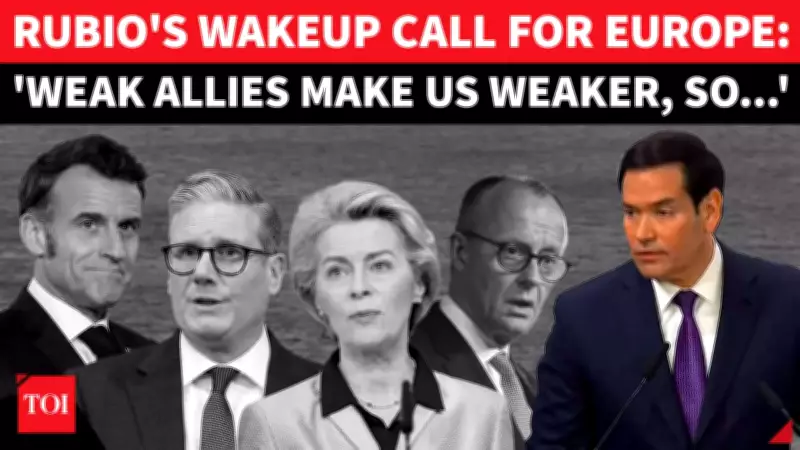
In a significant shift in American foreign policy rhetoric, US Secretary of State Marco Rubio delivered a direct and uncompromising message to European leaders at the Munich Security Conference, emphasizing that European security must become a European responsibility. The statement comes as Russia continues to make territorial gains in Ukraine, redrawing the conflict map through sustained military pressure.
"Defend Yourselves": Rubio's Direct Challenge to European Allies
Rubio's address represented one of the most explicit calls for European strategic independence in recent diplomatic history. "Weak alliances ultimately weaken America," Rubio declared, adding that Washington is prepared to chart a "new century of prosperity" with its "oldest friends" but only if they demonstrate greater burden-sharing and strategic self-reliance.
The Secretary of State's remarks signaled a potential pivot in US-European relations, with Rubio cautioning against prioritizing what he termed the "so-called global order" over core national interests. This language suggests a move toward a more hard-nosed, interest-driven American foreign policy approach that places less emphasis on multilateral commitments.

Broader Critique of International Institutions
Rubio extended his criticism beyond European security arrangements to include a sharp rebuke of multilateral institutions, particularly the United Nations. He argued that the UN has "no answers" and plays virtually no meaningful role in resolving major global conflicts, including the ongoing war in Ukraine.
This comprehensive critique of international governance structures reflects growing American skepticism toward traditional diplomatic frameworks and suggests a preference for bilateral or limited multilateral arrangements based on concrete national interests rather than abstract principles of global order.
Strategic Context: Russia's Advances in Ukraine
The timing of Rubio's message is particularly significant given Russia's continued military operations in Ukraine. Russian forces have reportedly made substantial territorial gains, pressing multi-front advances and capturing several settlements in recent weeks. This military pressure comes despite Ukrainian President Volodymyr Zelensky meeting with European allies in Munich to reiterate support for Ukraine's defense efforts.
Rubio's absence from a key Ukraine meeting during the conference further underscored the shifting American approach, delivering what observers described as a diplomatic blow to Zelensky's efforts to maintain unified Western support.
Implications for Transatlantic Relations
The Secretary of State's remarks represent a potential watershed moment in US-European relations, challenging decades of security assumptions that have underpinned the transatlantic alliance since World War II. By explicitly stating that European security is a European responsibility, Rubio has raised fundamental questions about the future of NATO and other security arrangements that have traditionally relied on American leadership and military commitment.
European leaders now face difficult strategic choices as they contemplate how to strengthen their own defense capabilities while managing relations with both a more transactional United States and an increasingly assertive Russia that continues to reshape Eastern Europe's security landscape through military force.