In a dramatic escalation of tensions, the United States launched pre-dawn military strikes on Venezuela on January 3, 2026, leading to the capture of the country's President, Nicolas Maduro. The operation, ordered by US President Donald Trump, has sent shockwaves across the international community, drawing sharp and divided reactions from world governments.
Operation Details and Immediate Aftermath
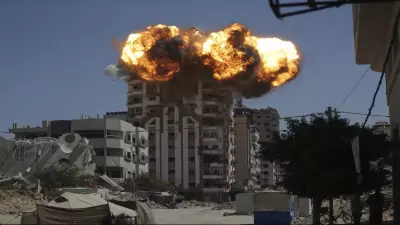
The military action began around 2 am local time (0600 GMT), with residents of Caracas reporting explosions, unusual aircraft activity, and plumes of black smoke across the capital. The strikes, which lasted over 90 minutes, targeted major military installations including Fuerte Tiuna and La Carlota air base.
Shortly after, President Trump took to his Truth Social platform to declare the mission a success. "The United States of America has successfully carried out a large scale strike against Venezuela and its leader, President Nicolas Maduro," he posted, confirming that Maduro had been captured and flown out of the country.

The situation on the ground remains tense. Venezuelan authorities declared a national emergency, mobilised troops, and reported power outages near military bases. The Port of La Guaira was damaged, and streets were largely empty as security forces deployed. Venezuela's Vice President, Delcy Rodriguez, stated she did not know Maduro's whereabouts and demanded the US government provide "immediate proof of life."
A World Divided: Condemnation and Cautious Support
The international response has highlighted a deep geopolitical rift. Leading the condemnation were traditional US adversaries and several Latin American nations.
Russia's foreign ministry labelled the action an "act of armed aggression," calling it deeply concerning and condemnable. It accused the US of letting ideological animosity override pragmatism.
Iran's Supreme Leader, Ayatollah Ali Khamenei, vowed resistance, stating, "We will not yield to the enemy." Cuba also condemned the operation.
In Latin America, Chile's President Gabriel Boric and Colombia's Gustavo Petro expressed concern and rejection of unilateral military action. Trinidad and Tobago's Prime Minister Kamla Persad-Bissessar explicitly distanced her country from the operations.
European reactions were mixed. The EU's foreign policy chief, Kaja Kallas, urged restraint and respect for international law while reiterating that Maduro "lacks legitimacy." Spain offered mediation. However, German lawmaker Roderich Kiesewetter warned that "Trump is destroying what was left of any trust in the U.S." Former Italian PM Giuseppe Conte said the strikes had "no legal basis."
Notably, Britain's Reform UK leader Nigel Farage offered cautious support, describing the strikes as "unorthodox and contrary to international law" but added they "may be a good thing."
Uncertain Future and Potential Fallout
The capture of Nicolas Maduro opens a period of profound uncertainty for Venezuela and the region. Key questions remain unanswered.
Who will lead Venezuela? While Vice President Delcy Rodriguez could assume control, senior officials like Interior Minister Diosdado Cabello have urged resistance, labelling the US a "terrorist enemy."
What is Maduro's legal fate? President Trump indicated the operation was done "in conjunction with U.S. Law Enforcement," raising the prospect of a criminal trial in the US, similar to that of former Panamanian leader Manuel Noriega.
The move risks significant international escalation. Russia, Iran, and Cuba have condemned the action, and several Latin American governments are calling for an emergency UN Security Council meeting.
Domestically, Trump faces potential backlash. The legal authority for the strikes is unclear, and the move could provoke resistance in Congress and among his "America First" base, which typically opposes overseas interventions.
Economically, Venezuela's state oil company PDVSA said production continued normally. Analysts warn of short-term oil price spikes due to instability, but a potential fall if sanctions are lifted under a new, US-friendly government.

As the world grapples with this unprecedented intervention, the principles of sovereignty and international law hang in the balance. The coming days will be crucial in determining whether this action leads to a resolution of Venezuela's long-standing crisis or plunges the region into deeper conflict.