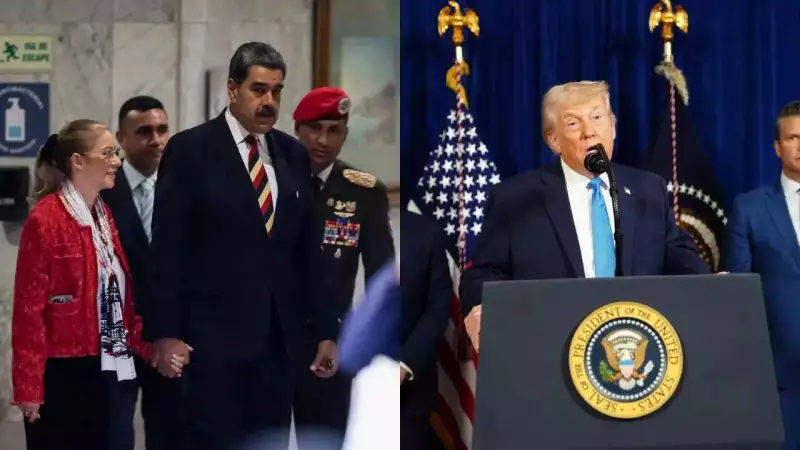
In a dramatic escalation that has sent shockwaves across the globe, the United States launched a series of pre-dawn military strikes on Venezuela in the early hours of Saturday. The operation, which triggered powerful explosions across the capital Caracas, culminated in the capture of Venezuelan President Nicolás Maduro and his wife, Cilia Flores. US President Donald Trump confirmed the action hours later, marking a severe intensification of the long-standing political crisis in the South American nation.
Chaos in Caracas: The Night of Strikes
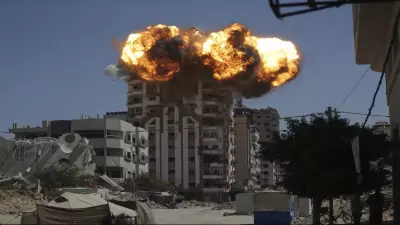
The military intervention began around 2:00 am local time (0600 GMT) on Saturday. Residents of Caracas were jolted awake by at least seven loud explosions, with the first blast reported shortly before 1:50 am. The sound of air sirens, low-flying aircraft, and widespread power outages plunged the city into chaos as panicked citizens rushed into the streets.
CNN correspondent Osmary Hernández described the intensity, stating, "One was so strong, my window was shaking after it." Reuters reported smoke rising from southern Caracas near a major military base, while witnesses confirmed sightings of aircraft overhead. Videos of the blasts quickly circulated on social media platforms, documenting the terrifying events.

Venezuelan authorities declared a state of emergency as panic spread. The attacks resulted in the deaths of at least 40 people. President Trump later confirmed the military action, stating the US had ordered strikes on targets inside Venezuela, including key military facilities.
Operation Absolute Resolve: The Capture of Maduro
According to US officials cited by CBS News, the capture of President Nicolás Maduro was executed by members of Delta Force, the US military's elite special mission unit, during a night-time raid in Caracas. Reports suggest the operation may have also involved the elite Army helicopter unit, the Night Stalkers, known for their role in the 2011 raid that killed Osama bin Laden.
In a detailed account on Saturday afternoon, President Trump and senior military officials explained how Maduro and his wife were tracked to a heavily fortified location. Trump dubbed the mission "Operation Absolute Resolve." He claimed Maduro had attempted to flee into a safe room but was "bum rushed so fast that he didn't get into that." US forces reportedly used a blowtorch to cut through steel doors during the assault.
General Dan Caine, Chair of the Joint Chiefs of Staff, stated that the special forces team reached Maduro's residence around 2:00 am, engaging in "multiple self-defence engagements" during their escape from Venezuelan territory. Trump emphasized that the operation lasted less than 30 minutes and had been rehearsed in advance.
From Caracas to a Brooklyn Cell: Maduro's Journey
US authorities detailed a complex transfer operation for the captured leader. Maduro was seized in Caracas and flown by US helicopter in the early hours of Saturday. He was first taken to the USS Iwo Jima at an undisclosed location in the Caribbean Sea, then transferred to the US naval base at Guantanamo Bay, Cuba.
His journey continued to Stewart Air Force Base in New York's Orange County, before a final helicopter trip into New York City. In total, Maduro travelled approximately 2,100 miles (3,300 kilometres) from Venezuela to the United States. Video footage released later showed him handcuffed and escorted by US officials. Trump shared an image of Maduro handcuffed and blindfolded aboard the USS Iwo Jima.
Maduro and Flores were eventually taken to the Metropolitan Detention Center in Brooklyn. US Attorney General Pam Bondi confirmed they have been indicted in the Southern District of New York on charges including conspiracy to commit narco-terrorism, conspiracy to import cocaine, and weapons-related offences. The booking process, including fingerprinting and medical exams, has begun.
Global Outcry and Condemnation
The US operation has triggered alarm and condemnation from governments worldwide, with many warning of severe regional instability and blatant violations of international law.

The European Union called for restraint and strict adherence to the UN Charter. British Prime Minister Keir Starmer stated all countries must uphold international law and clarified the UK was not involved. Russia condemned the act as an "abduction" and an "act of armed aggression," demanding immediate clarification.
In Latin America, reactions were sharply critical. Colombia called the move an assault on regional sovereignty and sought an urgent UN Security Council meeting. Mexico warned the strikes seriously jeopardised regional stability. Iran and Cuba strongly condemned the violation of Venezuela's sovereignty, with Havana denouncing "state terrorism."
China urged Washington to immediately release Maduro and his wife, ensure their safety, and resolve the crisis through dialogue, stating their removal violated international law and established norms.
As the world grapples with the fallout, the whereabouts of Maduro were initially unknown to Venezuelan authorities, with Vice President Delcy Rodríguez demanding "proof of life" according to the Associated Press. The event marks a unprecedented moment in modern hemispheric relations, setting a contentious precedent for international intervention.