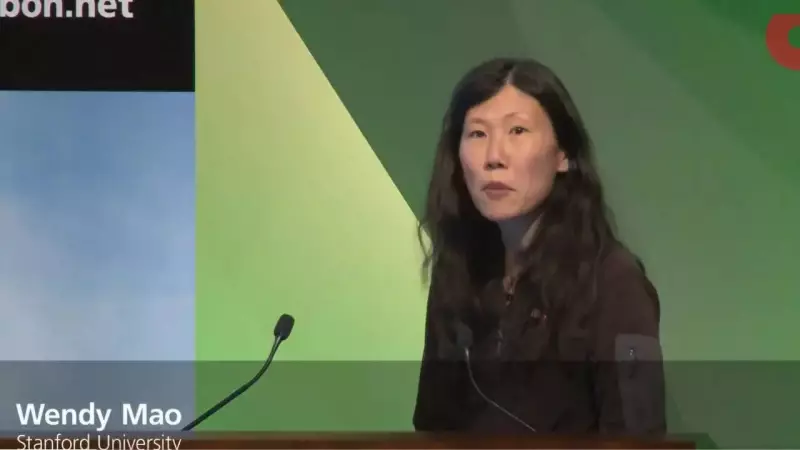
A prominent American scientist finds herself at the centre of a major controversy following a damning congressional investigation. Dr. Wendy Mao, the 49-year-old Chair of the Department of Earth and Planetary Sciences at Stanford University, is accused of having problematic research ties to China's military and nuclear weapons establishment over more than a decade.
The Allegations: A 'Containment Breach' in Research Security
A 120-page report titled 'Containment Breach' from the US House Select Committee on the Chinese Communist Party and the House Committee on Education and the Workforce has cast a shadow on Mao's distinguished career. The report alleges that Mao, an icon in materials science whose work with diamonds under extreme pressure has aided NASA spacecraft design, maintained 'dual affiliations' that presented a 'clear conflict of interest'.
The investigation claims her federally funded research became entangled with Beijing's defence apparatus. A key allegation involves her relationship with the China Academy of Engineering Physics (CAEP), China's primary nuclear weapons R&D complex. The report states Mao held formal ties to HPSTAR, a high-pressure research institute overseen by CAEP and headed by her father, renowned geophysicist Ho-Kwang Mao, while simultaneously conducting research funded by the US Department of Energy (DOE) and NASA.

Scientific Collaboration or Security Failure?
The House report details that Mao co-authored dozens of federally funded scientific papers with Chinese researchers from defence-linked institutions. The subject areas reportedly included hypersonics, aerospace propulsion, microelectronics, and electronic warfare – all fields with direct military applications. 'Taken together,' the report concludes, 'these affiliations and collaborations demonstrate systemic failures within DOE and NASA's research security and compliance frameworks.'
It frames these entanglements not as 'academic coincidences' but as signs of how China exploits open US research systems to weaponise American taxpayer-funded innovation. The report warns that American research has helped fuel the rise of China's military advancements in hypersonic weapons and stealth technology.
Stanford's Defence and the Broader Battlefield
In response to the allegations, Stanford University spokeswoman Luisa Rapport provided a defence. She stated that Mao, an expert in high-pressure science, 'has never worked on or collaborated with China's nuclear program.' Rapport also indicated that Mao has denied having a formal appointment with HPSTAR and has not held any appointments or affiliations with other Chinese institutions since 2012.
The case highlights how academic research has become a new front in the era of great-power rivalry. Investigators portray a battleground where cutting-edge science, national security, and international competition fiercely intersect, raising urgent questions about safeguards for federally funded research in the United States.