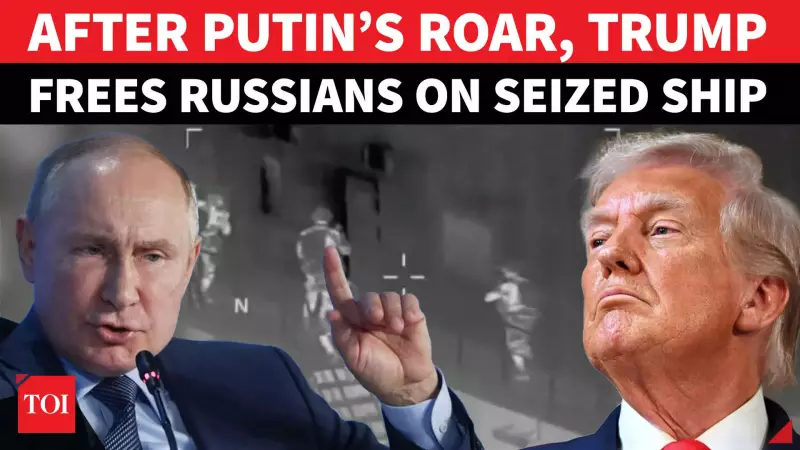
In a significant move to de-escalate maritime tensions, the United States has agreed to release the Russian crew members who were detained following the dramatic seizure of a Russian-flagged oil tanker. The incident, which took place in the North Atlantic, involved the vessel named Marinera.
The Seizure of the 'Shadow Fleet' Tanker
The operation, which occurred recently, saw U.S. military and Coast Guard forces, with support from the United Kingdom, intercept and seize the Russian tanker. Washington's justification for the action was that the Marinera was part of a so-called 'shadow fleet' allegedly used to transport oil linked to Venezuela, a nation under international sanctions.
Russia responded swiftly and harshly, condemning the seizure as an illegal and dangerous act that threatened the safety of international shipping lanes. Such a direct confrontation at sea between U.S. and Russian assets marks a rare and notable escalation, highlighting the ongoing geopolitical friction between the two powers.

Release of Crew Eases Immediate Tensions
The decision to release the detained Russian sailors appears to be a calculated step to prevent the situation from spiraling further. By letting the crew go, the U.S. has addressed one of Moscow's most immediate concerns, thereby easing the immediate diplomatic strain. However, the fate of the seized vessel itself remains a point of contention.
This development follows a period of heightened rhetoric, including warnings from Russian leadership. The release acts as a temporary pressure valve, but the underlying issues regarding sanctions enforcement and maritime jurisdiction are far from resolved.
Broader Implications for International Relations
This incident underscores the volatile nature of enforcing global sanctions, especially on the high seas. The use of a 'shadow fleet' to circumvent restrictions on oil exports from countries like Venezuela has become a major challenge for Western nations.
The U.S.-led seizure demonstrates a willingness to take direct action, but the subsequent crew release also shows an awareness of the risks of military miscalculation. The event is likely to influence future naval strategies and diplomatic engagements, not just between the U.S. and Russia, but also for other nations involved in similar sanction regimes.
Analysts suggest that while the immediate crisis has been dampened, the episode will lead to increased naval patrols and heightened alertness in key international waters, potentially setting the stage for more such encounters in the future.