US Military Operation Epic Fury Achieves Decisive Objective with Killing of Iran's Supreme Leader
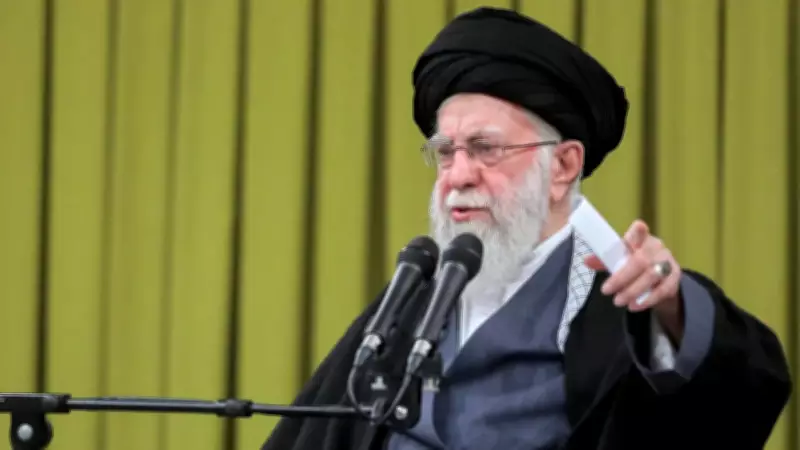
In a dramatic escalation of hostilities, Operation Epic Fury—the extensive US military action authorized by President Donald Trump—has reportedly achieved its most significant objective: the killing of Iran's Supreme Leader Ayatollah Ali Khamenei. The strikes, carried out early Sunday against the political heart of Tehran, mark what could be one of the most consequential geopolitical events in recent decades.
Daylight Strikes Target Iran's Political Leadership
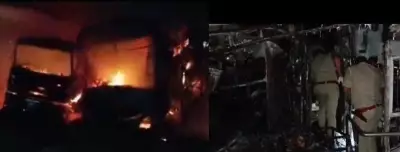
In a departure from conventional military tactics that typically exploit darkness for cover, the American offensive unfolded in broad daylight. Missiles and bombs began striking Tehran with calculated precision, seemingly designed to ensure the presence of senior officials in government offices during the attack. Thick plumes of smoke soon rose over the capital, particularly from buildings located in the city's political and administrative district.
The strikes reportedly concentrated on areas along Pasteur Street, where key institutions of the Iranian state are clustered. This district houses:

- The offices of the Supreme Leader
- The presidential complex of Masoud Pezeshkian
- The national security headquarters
- The Assembly of Experts, the powerful clerical body responsible for appointing a new supreme leader
Satellite imagery later showed the compound associated with Khamenei reduced to a vast stretch of grey dust and debris, indicating the devastating impact of the precision strikes.
Decapitation Strike Aims to Cripple Iranian Governance
Israeli officials described the initial assault as a "decapitation strike"—an attempt to simultaneously eliminate Iran's political leadership and cripple the core apparatus of governance. Such operations target not just military installations but the individuals who command the entire system.
According to initial reports, the operation did not only target Iran's top leader. Khamenei's daughter and grandchild were also said to be among those killed in the American strikes that hit key locations in the capital. The offensive appeared to extend beyond the sitting leadership, with reports indicating that the Tehran residence of former Iranian president Mahmoud Ahmadinejad was also struck during the operation, though his condition or whereabouts were not immediately confirmed.
Nationwide Attacks and Regional Implications
While Tehran bore the brunt of the initial wave, explosions were reported across several Iranian cities. Attacks were said to have taken place in:
- Qom
- Tabriz
- Kermanshah
- Lorestan
- Khorramabad
- Karaj
This suggests a nationwide operation targeting strategic infrastructure and political centers beyond just the capital. In Tehran, ambulances were seen rushing out of the Pasteur district carrying the injured as emergency services scrambled to respond to the widespread destruction.
"Khamenei, one of the most evil people in History, is dead," Donald Trump declared on his Truth Social platform following the operation. The offensive marked a dramatic escalation, with Trump launching a full-scale military operation against Iran over the weekend. The move appeared aimed at dismantling the Khamenei-led political establishment and reshaping power dynamics in the oil-rich nation.
Geopolitical Fallout and Conflicting Claims
If confirmed, the killing of Iran's supreme leader would potentially reshape power dynamics throughout the Middle East and trigger a chain reaction across the region. The operation comes amid broader regional tensions, with reports of:

- Missiles striking US navy headquarters in Bahrain
- Explosions heard in Abu Dhabi and Doha
- Iran attacking US military bases across the Middle East in operation 'Truthful Promise 4'
- An AI Tel Aviv flight returning to India amid the escalating conflict
For now, however, conflicting claims and limited verifiable information have left the international community watching closely as Tehran assesses the damage and prepares its response. The daylight nature of the strikes, the targeting of political rather than purely military infrastructure, and the apparent success in eliminating Iran's top leadership all suggest a carefully calculated operation with far-reaching implications for regional stability and global geopolitics.