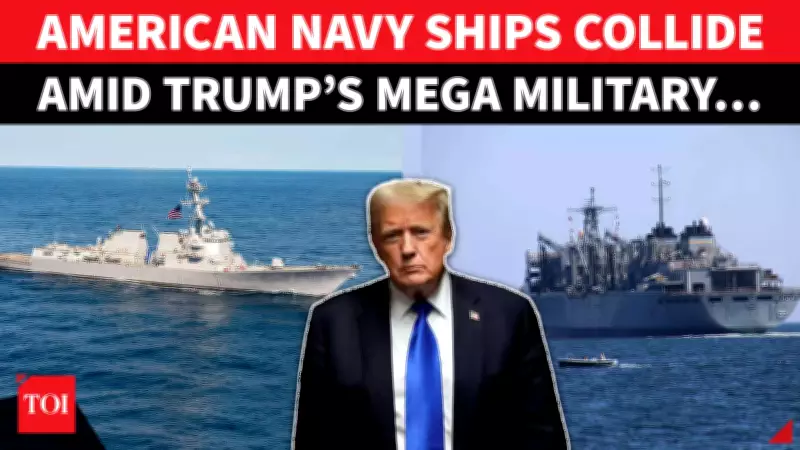
US Navy Ships Collide in Caribbean During Refueling Operation, Two Sailors Injured
In a significant maritime incident, two United States Navy ships collided during a refueling operation in the Caribbean Sea, resulting in injuries to two sailors and prompting an immediate investigation. The collision occurred during a replenishment-at-sea maneuver, a highly technical procedure where vessels sail in close proximity to transfer fuel and essential supplies.
Details of the Collision and Vessels Involved
The guided-missile destroyer USS Truxtun and the fast combat support ship USNS Supply were involved in the mid-sea crash. According to official statements from US Southern Command, both ships managed to continue sailing safely following the incident. The two injured personnel are reported to be in stable condition, receiving appropriate medical care.
Replenishment-at-sea operations are critical for maintaining naval readiness, allowing ships to refuel and resupply without returning to port. These maneuvers require precise coordination and navigation, making any collision a serious event that triggers standard investigative protocols.

Context of Increased Military Presence in the Caribbean
This incident unfolds against the backdrop of an expanded military buildup in the Caribbean under President Donald Trump's administration. The strategic focus includes combating drug trafficking networks and enforcing international sanctions in the region. The heightened naval activity is part of broader efforts to assert US influence and security interests in Caribbean waters.
The timing of the collision raises questions about operational tempo and safety protocols as military assets are deployed more frequently. Analysts note that such incidents, while rare, can occur during intensive training or operational schedules, especially in complex maritime environments.
Official Response and Investigation
US Southern Command has confirmed the collision and assured that both vessels remain operational. An official investigation is underway to determine the exact cause of the incident, examining factors such as:
- Weather conditions at the time of the operation
- Communication protocols between the ships
- Technical or mechanical failures
- Human error or procedural lapses
The Navy emphasizes its commitment to safety and will implement any necessary corrective measures based on the investigation's findings. This event highlights the inherent risks of naval operations, even during routine logistical tasks.
Broader Implications for Regional Security
The collision occurs as the US military increases its footprint in the Caribbean, a region of strategic importance for maritime security and counter-narcotics operations. Under Trump's policies, naval patrols and joint exercises have intensified, aiming to disrupt illicit activities and support allied nations.
This incident may prompt reviews of operational procedures to prevent future accidents while maintaining the pace of military activities. The safe continuation of both ships suggests robust damage control capabilities, but the injuries underscore the potential dangers faced by service personnel.
As the investigation progresses, further details are expected to emerge regarding the circumstances leading to the collision. The Navy's response will be closely watched by military observers and regional stakeholders concerned with stability in Caribbean waters.