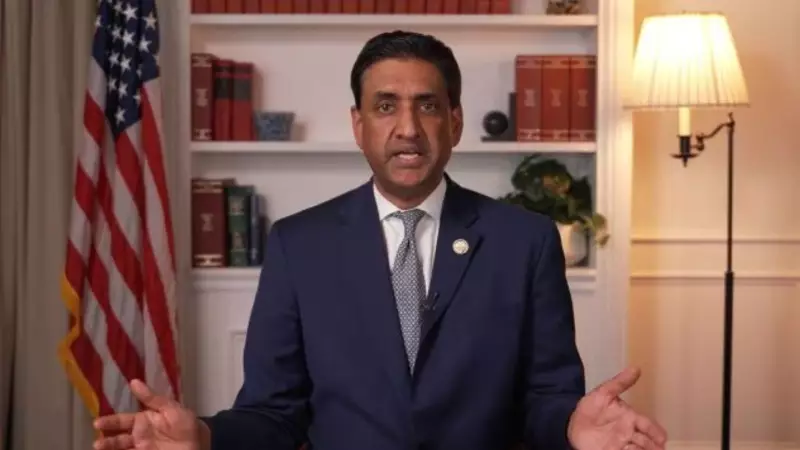
In a strong denunciation of religious violence, a prominent United States lawmaker has condemned the brutal killing of a Hindu worker in Bangladesh, labeling it a 'vile act of hatred and bigotry.' The incident has drawn sharp international attention to the safety of religious minorities in the South Asian nation.
Congressman Raja Krishnamoorthi's Forceful Condemnation
Democratic Congressman Raja Krishnamoorthi, who serves as the Ranking Member of the House Select Committee on the Strategic Competition between the United States and the Chinese Communist Party, issued a powerful statement on the matter. He expressed his deep distress over the murder of Ananta Jalil, a 35-year-old Hindu worker, in the Madaripur district of Bangladesh.
The lawmaker described the killing as part of a disturbing pattern of attacks targeting the Hindu community in Bangladesh. He urged the Bangladeshi government to take immediate and decisive steps to protect its religious minority populations and to ensure that the perpetrators of such hate crimes are brought to justice swiftly.

Details of the Tragic Incident in Madaripur
The victim, Ananta Jalil, was reportedly attacked by a group of individuals on October 13, 2024. According to local reports and police statements, the assault was motivated by religious animosity. Jalil succumbed to his injuries, leaving his family and community in a state of shock and mourning.
This tragic event is not an isolated case. It follows a series of similar incidents where members of the Hindu minority, as well as other religious groups, have faced violence and intimidation. Human rights organizations have repeatedly raised concerns about the deteriorating situation for minorities in the country, citing instances of temple vandalism, land grabbing, and physical assaults.
International Call for Accountability and Protection
Congressman Krishnamoorthi's statement goes beyond condemnation. It includes a clear call to action for the authorities in Dhaka. He emphasized that the government must uphold its duty to safeguard all citizens, regardless of their faith. The lawmaker stressed that failure to address this pervasive 'culture of impunity' could have serious consequences for communal harmony and the nation's international standing.
The US lawmaker's intervention highlights the growing international scrutiny on issues of religious freedom and minority rights in Bangladesh. It underscores the expectation from global partners that Bangladesh, as a democratic nation, will adhere to the principles of equality and justice enshrined in its constitution.
Broader Implications and the Path Forward
The killing of Ananta Jalil and the subsequent international reaction bring to the forefront the urgent need for systemic change. Experts point out that while Bangladesh has laws against discrimination and violence, their enforcement remains weak. Social activists argue that stronger political will is required to confront extremist elements and promote interfaith dialogue.
The response from the Bangladeshi government to this specific incident and to Congressman Krishnamoorthi's remarks is being closely watched. Effective investigation and transparent legal proceedings in this case could serve as a critical test of the administration's commitment to secular values and the rule of law.
Ultimately, this tragedy serves as a somber reminder of the work that remains to be done in combating religious intolerance. The voice of a US legislator adds significant weight to the calls from within Bangladesh for a more inclusive and secure society where every citizen can live without fear.