US and Israel Launch Coordinated Military Strikes Against Iran
The United States and Israel initiated coordinated air and sea strikes targeting Iran on Saturday, marking a significant escalation in regional tensions. Early attacks were reported near Tehran and in proximity to offices associated with Supreme Leader Ali Khamenei, signaling a direct challenge to Iranian leadership.
Trump Announces Major Combat Operations
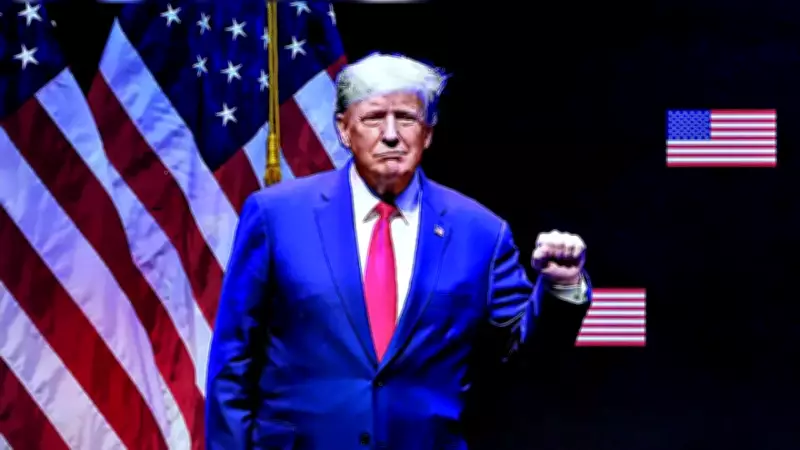
US President Donald Trump declared that Washington had commenced "major combat operations" against Iran, accusing the Iranian regime of aggressively advancing its nuclear and missile programs. In a nationally televised address, Trump emphasized that the objective was to defend American citizens by eliminating imminent threats posed by what he described as a "vicious group of very hard, terrible people."
The President outlined a historical pattern of Iranian aggression, referencing the 1979 US Embassy takeover in Tehran, the 1983 marine barracks bombing in Beirut, attacks on the USS Cole in 2000, and recent proxy activities across the Middle East. He specifically highlighted Iran's support for Hamas and the October 7 attacks on Israel as justification for the current military action.

Regional Fallout and Immediate Consequences
Iran issued an immediate warning of a "decisive response" to the strikes, while Israeli authorities ordered evacuations near known Iranian military installations. Missile and interceptor debris reportedly fell within Israeli territory, though no injuries were initially confirmed.
The conflict quickly spread across the region with multiple reports of explosions and interceptions:
- Missiles struck US navy headquarters in Bahrain
- Explosions were heard in Abu Dhabi and Doha
- Qatar confirmed intercepting incoming missiles
- An AI Tel Aviv flight was forced to return to India
Nuclear Program as Central Justification
President Trump made Iran's nuclear ambitions the centerpiece of his justification for military action. He referenced Operation Midnight Hammer from June, which targeted Iran's nuclear facilities at Fort Doe, Natanz, and Isfahan, and emphasized that preventing Iran from obtaining nuclear weapons remained a fundamental US policy objective.
"This terrorist regime can never have a nuclear weapon," Trump stated emphatically. "I'll say it again, they can never have a nuclear weapon."
Military Objectives and Regional Impact
The US military operation aims to achieve several strategic objectives according to the President's address:
- Destroy Iran's missile capabilities and related industries
- Neutralize the Iranian navy
- Disrupt terrorist proxy networks supported by Iran
- Ensure Iran does not obtain nuclear weapons
Trump acknowledged that American casualties were likely, stating "the lives of courageous American heroes may be lost" while emphasizing the operation as "a noble mission" for future security.
Direct Messages to Iranian Forces and Citizens
In a remarkable portion of his address, President Trump delivered separate messages to different segments of Iranian society. He offered "complete immunity" to members of the Islamic Revolutionary Guard, armed forces, and police if they "lay down your weapons," while threatening "certain death" for those who resist.
To the Iranian people, Trump declared "the hour of your freedom is at hand" and encouraged them to "take over your government" once military operations conclude, positioning the US action as support for regime change.
The coordinated strikes represent the most direct military confrontation between the US-Israel alliance and Iran in recent history, with potential ramifications for global energy markets, regional stability, and international diplomatic relations. As explosions continue to be reported across multiple Middle Eastern capitals, the situation remains fluid with both sides preparing for potential escalation.