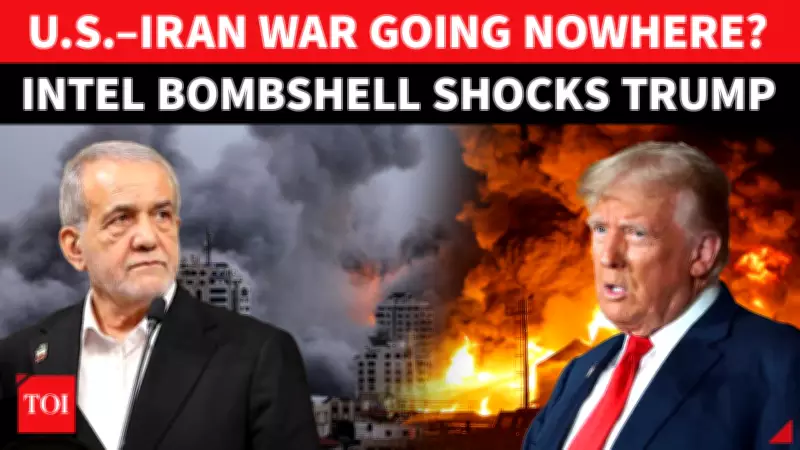
U.S. Intelligence Bombshell: War Unlikely To Overthrow Iran's Regime
A classified assessment from U.S. intelligence agencies has delivered a stark conclusion: even a massive, full-scale military war would probably fail to topple Iran's ruling clerical and military establishment. The report, prepared by the National Intelligence Council and cited by The Washington Post, reveals that Iran's power structures are deeply entrenched with mechanisms designed to ensure continuity, regardless of external attacks or the elimination of top leaders.
Iran's Resilient Power Structure
The intelligence analysis highlights how Iran's system is built to withstand severe shocks. The clerical and military establishment has developed robust protocols and succession plans that would allow the regime to persist even if key figures are removed. This institutional resilience means that military force alone may not achieve the goal of regime change, challenging conventional assumptions about the effectiveness of such campaigns.
Furthermore, U.S. analysts assess that Iran's opposition remains fragmented and lacks the organizational strength to seize control in the event of a power vacuum. Without a unified, capable alternative force, the current regime could maintain its grip on power despite significant military pressure.

Context of Escalating Military Campaign
These findings emerge as the Trump administration expands its military operations under Operation Epic Fury, demanding Iran's unconditional surrender while intensifying strikes across the Middle East. The campaign has raised serious questions about the feasibility of achieving regime change through military means, with the intelligence report suggesting that such an outcome is highly unlikely.
The assessment forces a reevaluation of strategic options, indicating that even a successful large-scale assault might not lead to the collapse of Iran's ruling system. Instead, it could result in prolonged conflict without achieving the desired political transformation.
Implications for U.S. Policy
The intelligence report poses significant challenges for policymakers advocating for military solutions. It underscores the complexity of Iran's political landscape and the limitations of force in effecting systemic change. As operations continue, the disconnect between military objectives and realistic outcomes becomes increasingly apparent.
This analysis may influence future decision-making, highlighting the need for multifaceted strategies that address Iran's internal dynamics beyond mere military confrontation. The resilience of Iran's regime, as detailed in the report, suggests that alternative approaches might be necessary to achieve long-term stability and change in the region.