A recent commentary from Bloomberg Opinion has ignited a crucial debate about the future of American diplomacy. The central argument is stark: The United States has officially ceased to care about the democratic nature of governments when deciding to offer or withdraw its support. This represents a fundamental shift in how the world's leading power engages with other nations.
The Core Argument: A New Pragmatism Over Principles
The analysis, published on 05 January 2026, suggests that traditional markers of democracy—free elections, civil liberties, and institutional checks—are no longer primary considerations for Washington. Instead, the focus has pivoted towards a more pragmatic, interest-driven approach. This means the US might actively back authoritarian regimes if it aligns with its strategic or economic goals, while potentially opposing democratically elected governments that pursue conflicting agendas.
This move away from promoting democratic values as a cornerstone of foreign policy marks a significant departure from post-Cold War practices. The commentary implies that geopolitical competition, security alliances, and trade advantages now trump the advocacy for democratic governance on the global stage.

Implications for Global Order and Key Nations
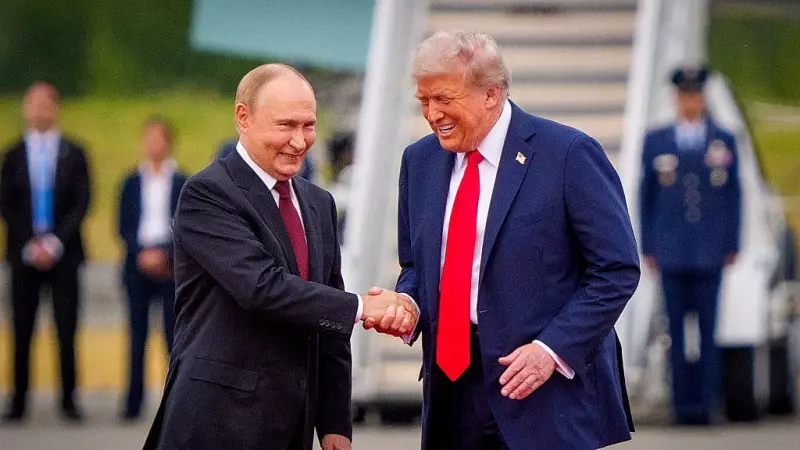
The consequences of this shift are profound. For nations often labeled as authoritarian, this policy change could translate into stronger diplomatic backing or reduced criticism from Washington. The analysis indirectly references figures like Vladimir Putin of Russia, whose governance has long been at odds with Western democratic ideals. Under this new framework, such regimes may find a more accommodating US stance, provided their interests converge.
Domestically, this foreign policy evolution is also seen as intertwined with America's own political landscape. The mention of Donald Trump alludes to the ongoing domestic debates and political divisions within the US that influence its international posture. The commentary suggests that internal political currents are reshaping how America defines its friends and adversaries abroad.
What This Means for the Future of Democracy Promotion
The long-term implications are a central concern. If the United States, a historical proponent of democratic systems, downgrades this priority, it could create a vacuum in global advocacy for political freedoms. Other powers with differing governance models may feel emboldened, potentially altering the international norms that have dominated for decades.
This new approach raises critical questions: Will this lead to a more stable world order based on clear-eyed interests, or will it undermine the global standing of democratic ideals? How will traditional allies, who share democratic values, recalibrate their relationships with Washington? The Bloomberg Opinion piece serves as a stark warning about the potential risks this pragmatic shift entails for the foundational principles of the international community.
Ultimately, the argument presented is that American foreign policy is undergoing a silent but seismic transformation. The era where a country's democratic credentials were a key factor in winning US support appears to be, according to this view, officially over.