US War Secretary Alleges Iran's New Supreme Leader Injured and Disfigured
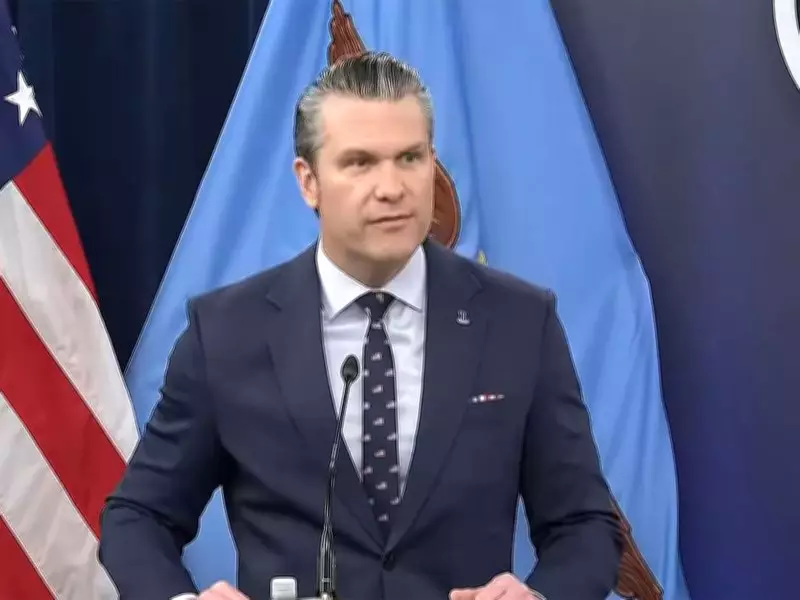
In a dramatic Pentagon briefing on Friday, US Secretary of War Pete Hegseth made explosive claims about the condition of Iran's new Supreme Leader, Ayatollah Seyyed Mojtaba Hosseini Khamenei. Hegseth stated that the leader is "wounded and likely disfigured" following recent US military strikes on Iran, describing Tehran's new leadership as "desperate and hiding" amid the ongoing conflict in West Asia.
Pentagon Briefing Reveals Critical Details
Speaking alongside Chairman of the Joint Chiefs of Staff General Dan Caine, Secretary Hegseth provided a stark assessment of Iran's current leadership situation. "Iran's leadership is in no better shape -- desperate and hiding, they've gone underground, cowering. That's what rats do," Hegseth declared during the high-profile briefing. "We know the new so-called not-so-supreme leader is wounded and likely disfigured."
The War Secretary questioned the legitimacy of the new Supreme Leader's recent communications, noting that Thursday's statement from Ayatollah Mojtaba Khamenei came only in written form without accompanying video or audio. "He put out a statement yesterday, a weak one actually, but there was no voice and there was no video," Hegseth observed. "Iran has plenty of cameras and plenty of voice recorders; why a written statement? I think you know why. His father is dead. He's scared, he's injured, he's on the run and he lacks legitimacy. It's a mess for them."

Iran's New Supreme Leader Vows Vengeance
In his first public address on Thursday, Ayatollah Mojtaba Khamenei, who assumed leadership following the death of his father Ayatollah Ali Khamenei, made forceful promises of retaliation. "I assure everyone that we will not forgo vengeance for the blood of your martyrs," the new Supreme Leader declared. "The vengeance we have in mind is not limited to the martyrdom of the great leader of the Revolution; rather, every member of the nation who is martyred by the enemy constitutes an independent subject in the file of vengeance."
The Iranian leader emphasized that only partial revenge had been achieved so far, stating: "Only a limited amount of blood revenge for the martyrs has so far taken concrete form, but until it is fully achieved, this case will remain on top of all other cases." He specifically mentioned the Minab Tayyibah Tree School incident as holding "special status" in Iran's planned reckoning with its adversaries.
Strategic Implications for Global Energy Markets
Ayatollah Mojtaba Khamenei also called for continued disruption of one of the world's most critical maritime passages. "Dear fighter brothers! The desire of the masses of the people is the continuation of effective and regret-inducing defence," he stated. "Furthermore, the leverage of blocking the Strait of Hormuz must certainly continue to be used."
This declaration has significant implications for global energy security, as the Strait of Hormuz serves as a vital conduit for approximately one-fifth of the world's oil shipments. Any sustained blockade or disruption could trigger substantial volatility in international energy markets and potentially impact global economic stability.
Background of Escalating Conflict
The current crisis escalated dramatically following the February 28 joint military strikes by the United States and Israel that resulted in the death of 86-year-old Supreme Leader Ayatollah Ali Khamenei. In retaliation, Iran targeted Israeli and US assets across several Gulf countries and Israel itself, leading to significant disruptions in regional waterways, particularly the strategically vital Strait of Hormuz.
The new Supreme Leader has vowed vengeance not only for his father's death but for all Iranian casualties in the ongoing conflict. The situation represents one of the most serious escalations in West Asia in recent years, with potential ramifications extending far beyond the immediate region to affect global geopolitics, energy security, and economic stability.

The Pentagon briefing and subsequent Iranian statements reveal a conflict that continues to intensify, with both sides demonstrating resolve while the human and strategic costs mount. The allegations about the Iranian leader's physical condition, if verified, could significantly impact the dynamics of leadership in Tehran and the broader conflict resolution process.