United States Requests Ukrainian Assistance to Combat Iranian Drone Threats in Middle East
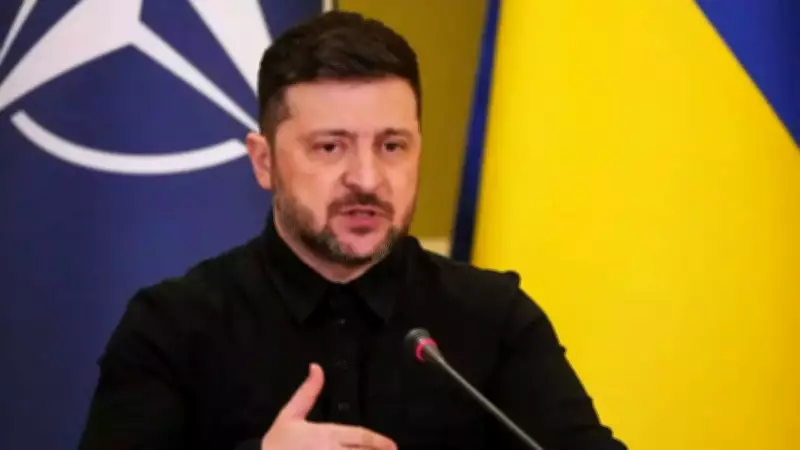
Ukrainian President Volodymyr Zelenskyy announced on Thursday that the United States has formally asked Ukraine for specific support in countering Iranian drone attacks in the Middle East region. The request comes as tensions escalate in the area following recent military incidents involving Iranian naval vessels.
Technical Expertise and Conditional Support
"We received a request from the United States for specific support in protection against 'shaheds' in the Middle East region," Zelenskyy wrote on social media platform X, referring to the Iranian-designed drones that have become increasingly prevalent in regional conflicts. "I gave instructions to provide the necessary means and ensure the presence of Ukrainian specialists who can guarantee the required security."
The Ukrainian leader emphasized that any assistance provided would be strictly conditional. "Of course, any assistance we provide will only be on the condition that it does not weaken our own defence in Ukraine and that it serves as an investment in our diplomatic capabilities," Zelenskyy stated clearly.

Ukraine's Hard-Earned Drone Defense Experience
Ukraine has developed significant expertise in countering Iranian-designed drones during Russia's ongoing invasion, where Kyiv has faced frequent attacks using these aerial weapons. This experience has led to the development of relatively inexpensive interceptor drones specifically designed to destroy incoming threats mid-air.
Zelenskyy explained Ukraine's position: "Ukraine helps partners who help ensure our security and protect the lives of our people." This reciprocal approach underscores the strategic nature of the proposed cooperation.
Understanding the Iranian Drone Threat
The Shahed-136 represents a significant threat in modern warfare as an Iranian-designed loitering munition, often described as a "suicide drone." Developed by Iran's defense industry, this weapon is designed to loiter over target areas before diving into objectives and detonating on impact.
The smaller Shahed-131 variant serves a similar loitering munition role with reduced capabilities:
- Lighter weight construction
- Smaller warhead capacity
- Shorter operational range, typically estimated at several hundred kilometers
Potential Applications and Strategic Considerations
Zelenskyy indicated that Kyiv could potentially provide both technical expertise and interceptor drones to help defend military bases and civilian infrastructure in Gulf countries currently facing Iranian attacks. This assistance would focus on protecting critical assets from the growing drone threat.
According to BBC reports, the Ukrainian leader has proposed a possible exchange arrangement with US allies in the Gulf region. This would involve providing interceptor drones in return for additional Patriot air defense missiles, which Ukraine urgently needs to counter Russian ballistic attacks on its own territory.
The request from the United States comes amid heightened tensions in the Middle East, following incidents involving Iranian naval vessels. Recent developments include Iran criticizing the United States after the sinking of warship IRIS Dena, which Iran described as "struck without warning." Additionally, a second Iranian warship has reportedly headed toward Sri Lanka just one day after a US submarine attack.
This developing cooperation between the United States and Ukraine represents a significant expansion of Ukraine's international security role, leveraging hard-won battlefield experience to address security challenges in another volatile region while carefully balancing its own defense needs against Russian aggression.