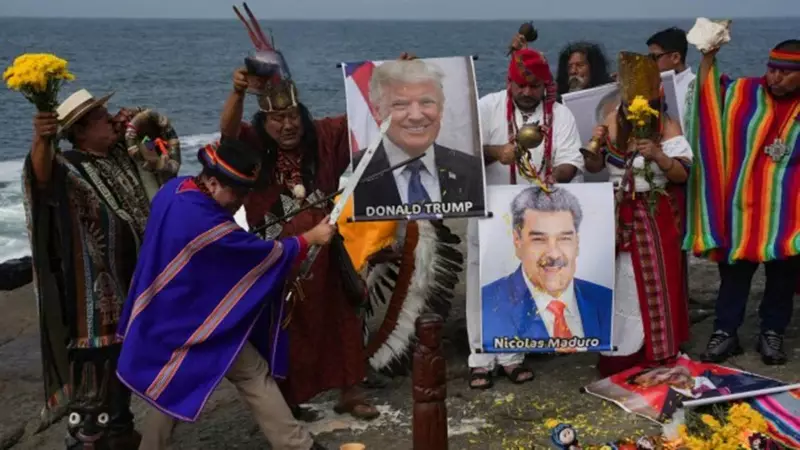
The recent dramatic events in Venezuela, marked by the arrest of President Nicolás Maduro, the installation of a military-backed successor, and explicit regime change threats from former US President Donald Trump, have escalated a chronic national crisis into a state of acute international confrontation. While the immediate rhetoric focuses on drug trafficking and national security, analysts argue these dynamics are part of a long-standing pattern.
Beyond Headlines: The Need for Historical Context
This moment demands more than just consuming breaking news alerts. To truly comprehend the forces at play, one needs historical memory, a regional perspective, and an understanding of how interventionist policies are crafted, justified, and often resisted. The situation in Venezuela cannot be viewed in isolation. It is deeply embedded in a complex history of political, economic, and cultural relations between the United States and Latin America.
A deeper look reveals that the language used today—framing action as law enforcement or humanitarian aid—echoes justifications used for decades. To navigate this complexity, a curated reading list offers invaluable insight. The following books serve as essential entry points to situate the current Venezuela crisis within its broader, turbulent context.

Essential Reads on US Policy & Its Consequences
1. "Everyone Who Is Gone Is Here" by Jonathan Blitzer
This book is crucial for connecting decades of US policy in Latin America to present-day crises. Blitzer meticulously demonstrates how policies, often packaged under the banners of security, law enforcement, or humanitarianism, have repeatedly destabilised nations, fuelled migration waves, triggered state collapse, and provoked authoritarian backlashes. As figures like Trump label Venezuela a "narco-terrorist regime" to justify unilateral action, this work shows how such narratives are recycled across US administrations, routinely resulting in humanitarian disasters instead of the promised stability.
2. "A Short History of U.S. Interventions in Latin America and the Caribbean" by Alan McPherson
McPherson provides a concise yet comprehensive timeline of US military and quasi-military involvement in the region, tracing it from the 19th century through to the modern drug war era. His analytical framework—examining causes, consequences, contestation, collaboration, and context—is a powerful tool for readers to critically evaluate claims that operations in Venezuela are purely about "law enforcement, not war." This history helps assess whether current events represent a shocking break from the past or a continuation of a well-established tradition.
Understanding the Ideology and Unintended Outcomes
3. "Beneath the United States" by Lars Schoultz
Schoultz presents a compelling argument that a deep-seated, paternalistic assumption of Latin American inferiority has shaped US policy for generations. The dismissive and coercive rhetoric employed by Trump towards Venezuela and even allies like Colombia fits squarely within this historical pattern. This book is key to understanding how such condescending attitudes translate into real-world policy, frequently implemented with scant regard for national sovereignty or long-term regional peace.
4. "Inevitable Revolutions" by Walter LaFeber
LaFeber's classic study of Central America offers a stark lesson on unintended consequences. It explains how relentless US efforts to suppress leftist movements in the region ultimately generated the very instability and conflict they aimed to prevent. As Washington revisits the logic of regime change in Venezuela, this book serves as a critical cautionary tale, highlighting the high risks of political backlash, prolonged conflict, and outcomes diametrically opposed to original intentions.
5. "Open Veins of Latin America" by Eduardo Galeano

Though a polemical work, Galeano's narrative remains a fundamental reference for understanding how many Latin Americans perceive US actions involving natural resources and political coercion. Trump's explicit references to Venezuelan oil reserves resonate directly with the extractive logic that Galeano powerfully critiques. Reading this alongside contemporary news analysis helps explain the depth of regional outrage and resistance to US justifications, grounding it in a centuries-old narrative of exploitation.
This reading list, spanning from scholarly histories to passionate polemics, provides the necessary tools to move beyond the immediacy of headlines. It allows readers to analyse the Venezuela crisis through the prisms of history, political economy, and regional perception, revealing the old playbook at work in a new confrontation.