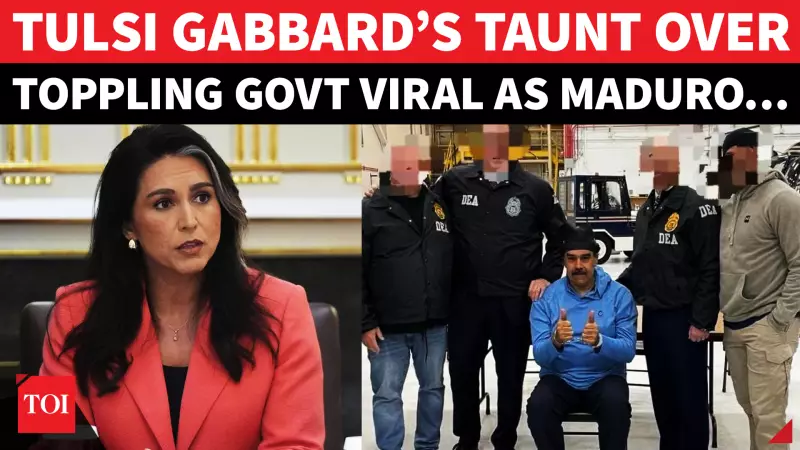
A resurfaced video of US Director of National Intelligence Tulsi Gabbard has sparked a fierce online debate, following the dramatic capture of Venezuelan President Nicolas Maduro. The clip, which has gone viral, features Gabbard delivering a sharp critique of the long-standing US policy of orchestrating regime change in foreign nations.
Gabbard's Stinging Critique Resurfaces
The video, from a past public address, shows Gabbard taking aim not just at the current Biden administration but at multiple previous US governments. Her core argument condemns the United States for its repeated involvement in toppling governments abroad, a practice she frames as destructive and hypocritical. The speech, now circulating widely on social media platforms, was recirculated on January 6, 2026.
Critics of Washington's foreign policy are leveraging this clip to highlight what they see as glaring hypocrisy. They argue that the capture and removal of Nicolas Maduro is a direct example of the very type of intervention Gabbard warned against. This has turned the video into a potent symbol for those accusing the US of acting as a self-appointed global policeman.

Debate Reignited Over American Interventionism
The viral attention has forcefully reignited a decades-old debate about the ethics and consequences of US military and political interventions worldwide. Central questions are being asked about America's role in destabilising regions and the long-term impact of such regime-change operations. The timing, immediately after the high-profile Maduro capture, has ensured the discussion reaches a global audience.
Observers note that the incident places the US intelligence chief, Gabbard, in an awkward position. Her past, publicly stated views now stand in stark contrast to the actions undertaken by the administration she is a part of. This contradiction is at the heart of the current online discourse and media analysis.
A Wider Geopolitical Context
The event does not exist in a vacuum. It ties into broader geopolitical tensions, notably with nations like China and Iran, which have historically opposed US interventionism. Comments from other global players criticising the US for "acting like world cop" add layers to this complex international story. The capture is seen by some as a bold move by the US, potentially signalling a more aggressive foreign policy stance in the Americas and beyond.
The renewed focus on Gabbard's words serves as a reminder of the deep divisions within American politics regarding foreign policy. It underscores the persistent tension between interventionist and non-interventionist approaches that has defined US strategy for generations. As the video continues to be shared, it keeps the spotlight firmly on the principles and pitfalls of American power on the global stage.