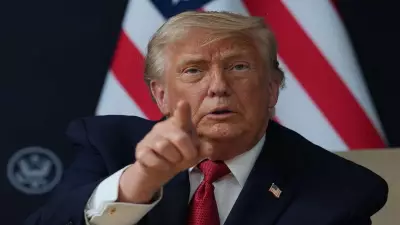
Recent international actions by US President Donald Trump involving Venezuela and Greenland have captured worldwide attention, with Indians living abroad closely monitoring these significant geopolitical developments. These moves represent strategic shifts in American foreign policy that carry implications for global power dynamics.
Greenland Acquisition Bid: Strategic Calculations and Backlash
President Trump's interest in acquiring Greenland has sparked intense analysis from geopolitical observers. According to Gayatri Panigrahi, an analyst based in the United Kingdom, this initiative contained multiple strategic dimensions that ultimately faced unexpected resistance.
Military and Economic Motivations
From a military perspective, Greenland offers the United States enhanced positioning in the increasingly important Arctic region. Control over this territory would provide strategic advantages in an area where global powers are expanding their presence.

Economically, Greenland possesses valuable rare earth resources that represent long-term strategic value for American industries and technological development. These minerals are crucial for everything from consumer electronics to defense systems.
Domestic Political Considerations
Panigrahi notes that the Greenland initiative may also have been intended to project strong leadership while potentially boosting presidential approval ahead of the 2026 senate elections. This timing is particularly significant in states where Republican incumbents are retiring and where Trump's approval ratings have shown weakness.
"But this strategy miscalculated Europe's unified resistance," Panigrahi observed, "causing the initiative to backfire politically rather than strengthen US standing." The European response demonstrated that even close allies would push back against what they perceived as expansionist ambitions.
Venezuela Operation: Regime Change and Strategic Interests
While the Greenland initiative faced setbacks, Trump demonstrated decisive action in Venezuela through a successful overnight joint US military operation in Caracas that resulted in the capture of Venezuelan President Nicolás Maduro.
Geopolitical Context and Historical Background
Som Mohanty, an analyst from Boston, explained the broader context: "Multiple US presidents have kept Maduro in their crosshairs to remove him as Venezuela has been close to Russia. The US doesn't want another Russian ally in their backyard like Cuba."
This perspective highlights the longstanding concern about Russian influence in the Western Hemisphere. "That's the reason the US always supported opposition leaders in Venezuela to change the government democratically," Mohanty added. "But it never happened, leading to more direct intervention."
Economic Dimensions: Oil and Currency Dominance
Observers from Odisha have noted that oil considerations played a significant role in US actions toward Venezuela. More cheap oil procurement from Venezuela would potentially lead to lower gas prices for American consumers, providing domestic economic benefits.
Panigrahi offered additional insight into the financial dimensions: "The US economy has historically depended on the petro-dollar system, where global oil trade is denominated in US dollars. Venezuela's decision to supply oil to China in yuan directly undermined the petro-dollar framework."
From this perspective, US pressure and attempts at regime change in Venezuela can be seen as part of a broader effort to protect dollar dominance in international trade, which remains a cornerstone of American economic power.
Political Strategy and Domestic Considerations
Trump's approach to foreign interventions represents a departure from previous administrations in significant ways. Unlike past US engagements in Iraq and Vietnam, Trump has avoided committing to prolonged military conflicts, keeping his election promise to avoid "endless wars."
Domestic Political Objectives
Some Indian observers believe these international moves serve important domestic political goals. Ravi Shankar from Dallas, Texas, commented: "It's crystal clear that Trump wants to 'Make America Great Again' (MAGA). These actions project strength to voters and reinforce his political brand."

This analysis suggests that foreign policy decisions are increasingly viewed through the lens of domestic political calculations, with international actions designed to resonate with specific voter constituencies and reinforce campaign themes.
Global Implications and Future Outlook
The international community continues to assess the implications of these American actions. The Venezuela operation demonstrates a willingness to use military force for regime change in America's immediate neighborhood, while the Greenland initiative reveals ambitions for territorial expansion in strategically important regions.
As these developments unfold, Indians living abroad and geopolitical analysts worldwide will continue to monitor how these actions reshape international relations, affect global markets, and influence the balance of power between major nations in an increasingly multipolar world.