The geopolitical landscape witnessed fresh tremors as statements from former US President Donald Trump regarding Greenland's acquisition for national security created an international uproar. This comes in the immediate aftermath of the shocking US bombardment of Venezuela and the capture of its president, Nicolás Maduro, events that have sent shockwaves far beyond Latin America.
Trump's Provocative Remarks on Greenland
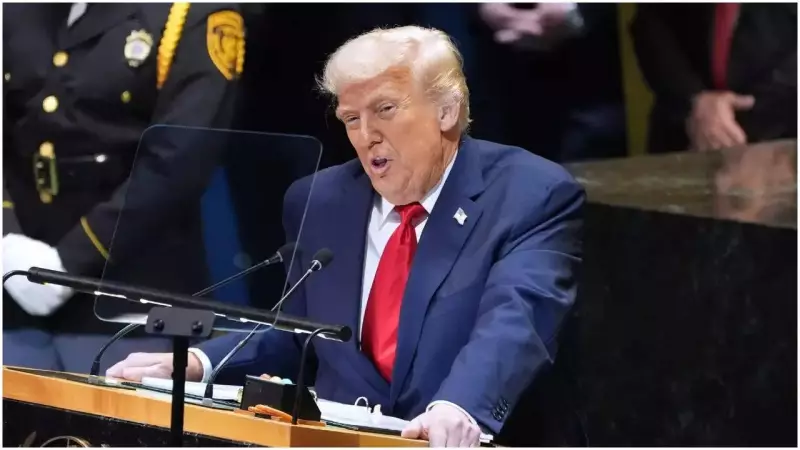
Speaking in Florida, Donald Trump explicitly stated the United States' need for Greenland. "We need Greenland for national security, not for minerals," he declared. He downplayed economic interests, claiming, "We have so many sites for minerals and oil and everything. We have more oil than any other country in the world."
He justified the need by pointing to perceived threats, saying, "If you take a look at Greenland, you look up and down the coast. You have Russian and Chinese ships all over the place. We need it for national security. We have to have it." In a related move, he announced making an individual named Marco a "special envoy to Greenland."

These comments were preceded by a provocative social media post from Katie Miller, a right-wing podcaster and wife of Trump's former deputy chief of staff, Stephen Miller. She posted a map of Greenland draped in the US flag with the single-word caption: "SOON." This echoed Trump's confirmation to The Atlantic magazine on Sunday, where he stated, "We do need Greenland, absolutely."
Denmark and Greenland's Firm Rejection
The threat to annex the mineral-rich territory, which is an autonomous part of the Kingdom of Denmark and within the NATO alliance, was met with immediate and firm condemnation from both Copenhagen and Nuuk.
Greenland's Prime Minister, Jens-Frederik Nielsen, called Miller's post "disrespectful." He emphasized, "Relations between nations and peoples are built on mutual respect and international law – not on symbolic gestures that disregard our status and our rights." He sought to calm any public anxiety, asserting, "There is neither reason for panic nor for concern. Our country is not for sale, and our future is not decided by social media posts."
Denmark's ambassador to the US, Jesper Møller Sørensen, issued a diplomatic but pointed response. He reposted the provocation with a "friendly reminder" of the strong defence ties between the two nations. "We are close allies and should continue to work together as such. US security is also Greenland’s and Denmark’s security," he stated.
Highlighting Denmark's commitment, he noted the country increased defence spending in 2025, committing $13.7 billion "that can be used in the Arctic and North Atlantic. Because we take our joint security seriously." He concluded with a clear message: "And yes, we expect full respect for the territorial integrity of the Kingdom of Denmark."
Broader Implications and Regional Context
This diplomatic spat unfolds against a backdrop of heightened global tensions, notably the recent military action in Venezuela. The combination of events signals a potential return to a more unilateral and assertive US foreign policy posture under a possible future Trump administration, focusing on hemispheric influence and Arctic dominance.
The Arctic region, where Greenland holds strategic significance, has become an arena of increasing competition among global powers like the US, Russia, and China. Trump's comments directly frame Greenland as a crucial asset in this emerging great power contest, prioritizing security control over its vast natural resources.
The firm, unified response from Denmark and Greenland demonstrates that such territorial ambitions, even if voiced informally, will be met with staunch resistance from established allies, challenging the notion that strategic interests can override sovereignty and diplomatic norms.