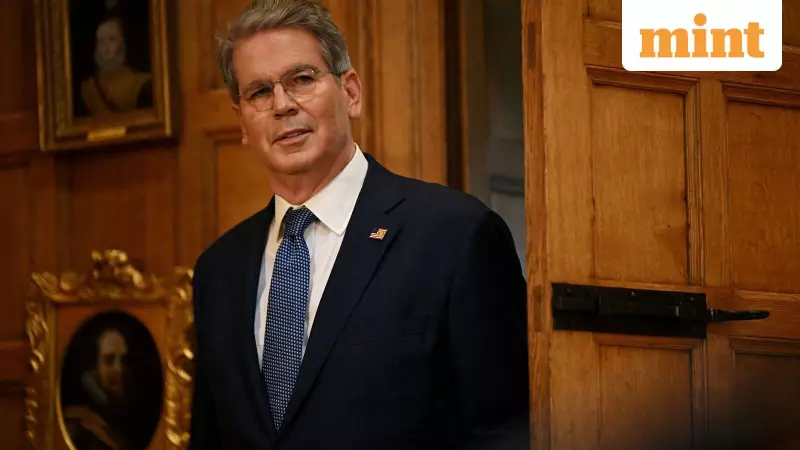
US Treasury Secretary Scott Bessent has revealed that President Donald Trump's ambitious proposal to provide Americans with a tariff dividend of approximately $2000 could materialize through tax reductions included in his signature economic policy legislation. This clarification came during Bessent's appearance on ABC's This Week program, where he addressed Trump's recent social media announcement about the potential payout.
Understanding the $2000 Dividend Proposal
Bessent responded directly to Trump's Sunday social media post where the President championed his tariff policies and promised substantial financial returns to American citizens. The Treasury Secretary clarified that while he hasn't personally discussed this specific suggestion with Trump, the $2000 benefit could manifest in various forms through the administration's tax reform agenda.
"The $2000 dividend could come in lots of forms, in lots of ways," Bessent stated during the interview. "It could be just the tax decreases that we are seeing on the president's agenda — no tax on tips, no tax on overtime, no tax on Social Security – deductibility on auto loans." This comprehensive approach to tax relief represents the administration's broader strategy to return tariff-generated revenue to American households.

Trump's Defense of Tariff Policies
President Trump vigorously defended his tariff strategy in a Truth Social post, declaring opponents of tariffs as "FOOLS" while highlighting America's current economic standing. He emphasized that the United States has become "the Richest, Most Respected Country In the World, With Almost No Inflation, and A Record Stock Market Price."
The President further elaborated on his dividend promise, stating that "a dividend of at least $2000 a person (not including high income people!) will be paid to everyone" as the government collects "Trillions of Dollars" through tariff revenues. Trump also claimed these funds would help address the country's "ENORMOUS DEBT, $37 Trillion" while supporting record investments in domestic manufacturing and factory construction.
Legal Challenges and Supreme Court Scrutiny
The administration's tariff policies face significant legal hurdles following Supreme Court arguments on November 5. Multiple justices expressed skepticism about whether emergency laws grant Trump "near-limitless power" to establish and modify import duties. According to Bloomberg reports, the court's potential overturning of these tariffs could require refunds exceeding $100 billion.
The legal case specifically examines Trump's April 2 "Liberation Day" tariffs, which impose taxes ranging from 10% to 50% on most US imports depending on their country of origin. Central to the legal debate is whether tariff revenues function as de facto taxes, which Chief Justice John Roberts noted have "always been the core power of Congress."
Trump has warned that a Supreme Court ruling against his tariff authority would be a "disaster" for the United States, maintaining that these measures are essential for addressing the nation's persistent trade deficit. Bessent reinforced this position, stating that "the real goal of tariffs is to rebalance trade and make it more fair" while acknowledging the potential for trillions in revenue collection over coming years.