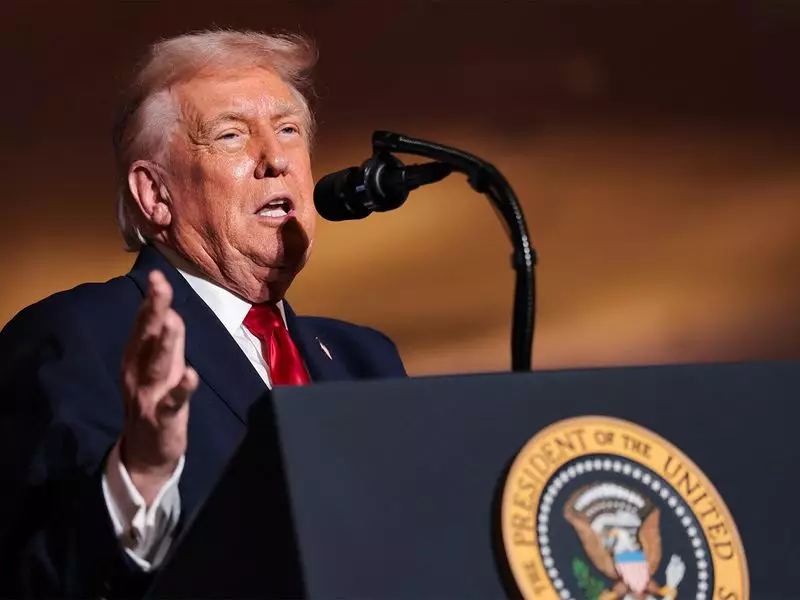
In a significant development with major implications for global energy markets, former US President Donald Trump has announced a plan involving Venezuela's vast oil reserves. According to Trump, interim authorities in Venezuela are prepared to redirect a massive quantity of sanctioned crude oil directly to the United States.
The Core Announcement and Its Scale
Speaking at a campaign event in Philadelphia, Trump disclosed that the interim Venezuelan government, which the US recognized during his presidency, has agreed to turn over a substantial portion of its oil to American interests. The former president specified that the deal involves 30 to 50 million barrels of high-quality, sanctioned Venezuelan oil. This announcement signals a potential dramatic shift in the flow of one of the world's largest hydrocarbon resources.
Trump framed this prospective move as a direct benefit of his administration's foreign policy, contrasting it with the current approach under President Joe Biden. He emphasized that this oil would come from reserves that are currently under strict international sanctions, primarily targeting the regime of President Nicolas Maduro.

Context: US-Venezuela Relations and Sanctions
This revelation cannot be understood without the backdrop of the complex and strained relationship between the United States and Venezuela. For years, the US has imposed crippling sanctions on Venezuela's state-owned oil company, PDVSA (Petroleos de Venezuela, S.A.). These measures were designed to pressure Maduro's government following elections widely condemned as illegitimate and to support opposition leader Juan Guaido, whom the US and dozens of other nations recognized as the country's legitimate interim president.
The Trump administration took a particularly hardline stance, implementing sweeping sanctions that severely restricted Venezuela's ability to export its oil, the lifeblood of its economy. The proposed plan to redirect this oil to the US represents a complete reversal of that sanctioned status for a specific, large volume of crude.
Political Reactions and Future Implications
The announcement has immediately injected a new element into the US presidential campaign and global energy diplomacy. Trump positioned the move as a strategic win for American energy security and economic interests. However, the feasibility and logistics of such a transfer under current geopolitical conditions remain complex questions.
Analysts point out that for this plan to proceed, it would require a significant political change in Venezuela, likely the departure of Nicolas Maduro from power and the full installation of the US-backed interim government. Furthermore, it would necessitate a major overhaul of the existing sanctions framework. The Biden administration has shown some flexibility, temporarily easing some oil sanctions in 2023 in exchange for electoral guarantees from Maduro, but a deal of this magnitude would be on a different scale entirely.
The potential consequences are vast. Redirecting 30-50 million barrels of Venezuelan oil to the US could impact global oil prices, alter trade flows, and significantly bolster American strategic reserves. It would also mark a profound realignment in hemispheric relations, rewarding Venezuelan opposition forces and dealing a heavy blow to Maduro's regime. For the global market, it would reintroduce a large stream of high-quality crude that has been largely absent due to sanctions and years of underinvestment and mismanagement within Venezuela's oil industry.
As the US election season heats up, energy policy and relations with resource-rich nations like Venezuela are poised to remain a key point of debate and strategic maneuvering.