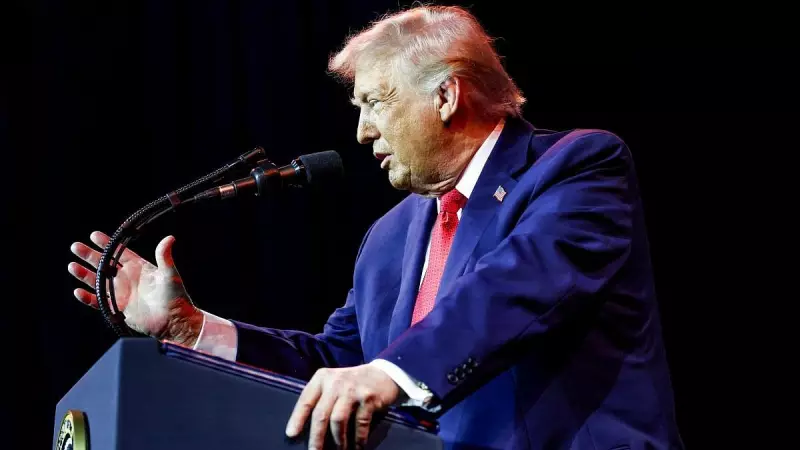
In a statement that has ignited global debate, former United States President Donald Trump has laid out a vision of American power on the world stage, suggesting its primary restraint would be his personal sense of right and wrong. The remarks, made on 09 January 2026, present a stark view of sovereignty and international order.
A Personal Arbiter of Global Rules
When questioned directly about whether his potential administration would feel obligated to follow established international laws, Trump affirmed, 'I do.' However, he immediately qualified this by making it clear that he himself would be the ultimate judge of when such global constraints would apply to the United States. This position effectively places the interpretation and application of international legal frameworks in the hands of a single leader's discretion.
The core of his argument rests on a doctrine of national sovereignty taken to its extreme. In Trump's view, the United States, as a powerful nation, should not be bound by multilateral agreements or international courts if they are perceived to conflict with American interests as defined by the sitting President. The only check on this executive power, according to his statement, would be the leader's internal moral compass.

Reactions and Implications for Global Governance
This declaration has profound implications for global diplomacy and international law. Analysts suggest such a stance undermines the post-World War II system of rules-based order, where nations, regardless of size or power, agree to common standards of conduct. It signals a potential return to a might-makes-right approach in foreign policy, where power dictates terms rather than negotiated principles.
The reaction from allies and adversaries alike is expected to be one of deep concern. For countries like India, which operates within and advocates for a multilateral framework, this vision presents significant challenges. It raises questions about the stability of alliances, the enforcement of trade agreements, and the collective response to global issues like climate change and security threats.
What This Means for the Future
Trump's comments, recorded by the International New York Times, are not merely theoretical. They provide a clear window into the foreign policy approach that could define a future administration under his leadership. The idea of power restrained primarily by a leader's 'own morality' removes the predictable, institutional safeguards that other nations rely upon for stable relations.
For the international community, the statement serves as a critical data point. It necessitates preparations for a world where traditional diplomatic channels and legal structures may be bypassed or dismissed by a key global player based on unilateral judgment. The long-term consequences could include increased geopolitical instability and a accelerated shift towards regional blocs and bilateral deals, as trust in collective systems erodes.
As the political landscape evolves, this vision of presidential power unconstrained by external legal frameworks is sure to remain a central and contentious topic in discussions about America's role in the world.