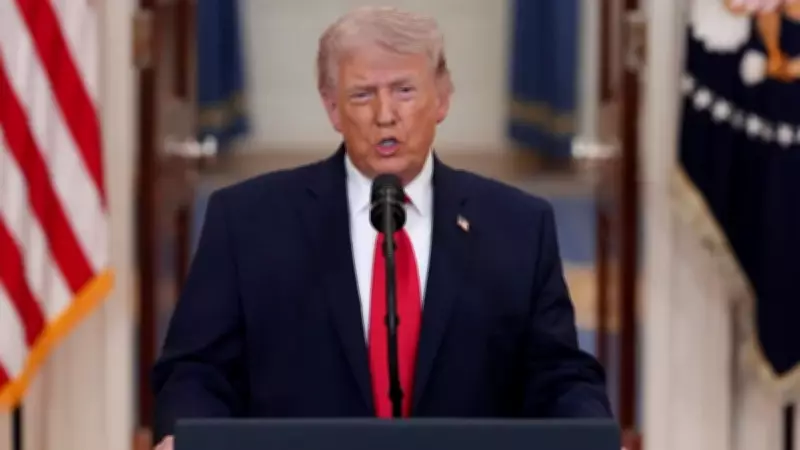
Trump Calls for Courage from Nations Dependent on Hormuz Strait Oil
In a recent statement, former United States President Donald Trump declared that the United States has no need for oil imports from the strategically vital Hormuz Strait. He emphasized that countries reliant on this crucial maritime passage must exhibit courage and take responsibility for protecting it themselves.
US Independence from Hormuz Oil Imports
Trump highlighted America's energy self-sufficiency, pointing to domestic production and alternative sources that reduce dependence on Middle Eastern oil shipped through the strait. This stance marks a continuation of his long-held policy advocating for reduced foreign oil reliance, which he promoted during his presidency from 2017 to 2021.
The Hormuz Strait, located between Oman and Iran, is one of the world's most important chokepoints for global oil shipments. Approximately 20-30% of the world's oil passes through this narrow waterway, making it a focal point for international trade and geopolitical tensions.

Urging Global Partners to Step Up
Trump's comments directly challenge other nations, particularly in Asia and Europe, that depend heavily on oil transported via the Hormuz Strait. He argued that these countries should not expect the US to bear the primary burden of securing the route. Instead, he called for a collective effort where those with the most at stake lead protection initiatives.
This position aligns with his "America First" foreign policy, which often questioned traditional US military commitments abroad. By stating the US needs no oil from the strait, Trump effectively shifts the onus onto importing nations to ensure its security, potentially reshaping global defense dynamics in the region.
Implications for Global Shipping and Security
The statement comes amid ongoing regional instability that periodically threatens shipping lanes. Key implications include:
- Increased pressure on allies: Nations like Japan, South Korea, and India may face calls to enhance their naval presence or contribute more to multinational patrols.
- Potential for renewed tensions: Trump's remarks could exacerbate existing frictions with Iran, which has previously threatened to block the strait during conflicts.
- Shift in energy strategies: Import-dependent countries might accelerate efforts to diversify oil sources or invest in renewable energy to reduce vulnerability.
While the US currently maintains a significant military presence in the region, Trump's vision suggests a possible reduction in this role if his policy were reinstated. This could lead to a power vacuum or encourage regional powers to assume greater responsibility for maritime security.
Experts note that the Hormuz Strait remains critical for global energy markets, and any disruption could spike oil prices worldwide. Trump's comments underscore the delicate balance between national interests and international cooperation in maintaining open sea lanes.