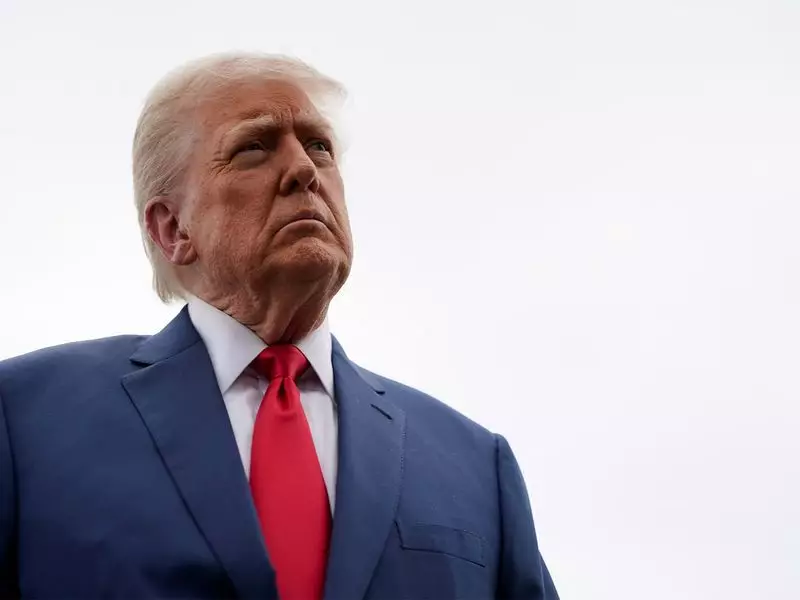
Former US President Donald Trump has made a bold claim about America's role on the global stage, asserting that the United States has effectively become the "real United Nations." This statement came in the wake of a significant diplomatic achievement where US mediation successfully brokered a ceasefire between Thailand and Cambodia, ending a deadly border clash.
Trump's Boast on Global Mediation
Trump highlighted this incident as a prime example of American diplomatic strength in action. He pointed out that while the actual United Nations often engages in lengthy discussions, it was the swift and decisive intervention by the United States that brought an immediate halt to the hostilities. The conflict, which erupted along a disputed border region, had resulted in casualties and threatened to escalate into a larger regional crisis.
The former president used this event to underscore his long-standing argument about the efficacy of American power compared to multinational bodies. "The United States has become the real United Nations," Trump stated, emphasizing that nations in conflict are increasingly looking towards Washington for solutions rather than the UN headquarters in New York.

Details of the Thailand-Cambodia Ceasefire
The border skirmish between Thailand and Cambodia involved exchanges of artillery and gunfire. The disputed area, near ancient temples, has been a flashpoint for decades. Casualties were reported on both sides, raising international concern.
According to reports, US diplomatic channels worked intensively behind the scenes, engaging with leadership in both Bangkok and Phnom Penh. This effort culminated in an agreement for an immediate cessation of hostilities. The US-mediated truce aimed not only to stop the fighting but also to establish a framework for further talks to address the underlying border issues.
Implications for Global Diplomacy
Trump's comments and the event itself shine a spotlight on the evolving dynamics of international conflict resolution. It raises questions about the role of traditional institutions like the UN versus the direct influence of superpowers. The successful mediation is likely to be cited by Trump and his supporters as evidence of a foreign policy approach that prioritizes direct, results-oriented action over multilateral diplomacy.
This development also has implications for Southeast Asia, signaling that the United States remains a committed and active player in ensuring regional stability. The swift resolution of this conflict prevented further loss of life and potential economic disruption. However, analysts note that while a ceasefire is a crucial first step, a lasting peace will require sustained diplomatic engagement from all parties involved.
The episode serves as a powerful case study in modern geopolitics, where American diplomatic leverage can act as a rapid-response mechanism to douse international fires. Whether this model is sustainable or desirable in the long term compared to a rules-based multilateral system remains a topic of intense global debate.