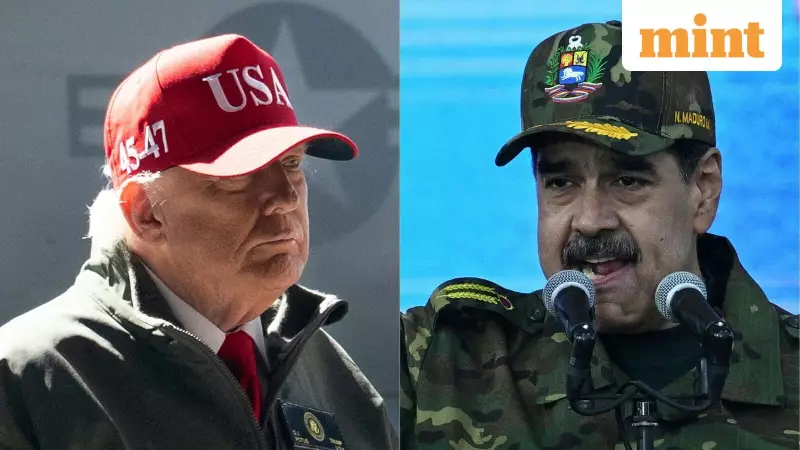
In a press conference that sent shockwaves through international diplomatic circles, former United States President Donald Trump made a startling revelation about a past threat directed at the Venezuelan government. The event, which was broadcast live, saw Trump recounting a private warning he claims to have issued to Venezuelan leader Nicolás Maduro.
The Core Revelation: A Direct Threat to Maduro
During his address, Donald Trump explicitly stated that he had told Nicolás Maduro he would be subject to a 'bombing'. This stark declaration was framed within the context of Trump's 'maximum pressure' campaign against the Maduro regime, which his administration did not recognize as legitimate. The former president suggested this aggressive posture was a key reason his tenure did not see a full-scale war, implying that the threat of force was a successful deterrent.
The comments have immediately reignited debates about US foreign policy in Latin America and the use of coercive rhetoric in international relations. Analysts are parsing the statement to understand whether it referred to a specific, planned military operation or was meant as a broader warning of potential consequences.

Context of US-Venezuela Relations Under Trump
The relationship between the United States and Venezuela was intensely hostile during Trump's presidency. His administration recognized opposition figure Juan Guaidó as the country's legitimate interim president in 2019, imposing severe sanctions on Maduro's government and its oil sector. The goal was to force Maduro from power, citing allegations of electoral fraud and human rights abuses.
Trump's latest remarks provide a rare, unfiltered glimpse into the private machinations of that pressure campaign. They suggest that behind the public sanctions and diplomatic maneuvers, direct threats of military action were also part of the strategic calculus. This aligns with previous reports and speculation that military options were discussed at the highest levels of the White House, though never publicly activated.
Implications and Global Reactions
The fallout from this admission is multifaceted. For Venezuela and the Maduro government, it serves as a potent piece of propaganda, validating their long-held claims of US imperialism and aggression. It may bolster Maduro's narrative of being a leader under constant siege from a foreign power.
Internationally, the statement complicates current diplomatic efforts. The Biden administration has pursued a somewhat different tack, engaging in limited negotiations and offering sanctions relief in exchange for democratic concessions. Trump's revelation of a past bombing threat could harden positions in Caracas, making them more distrustful of US intentions regardless of who is in office.
Furthermore, it raises serious questions for allies and observers in India and worldwide about the consistency and predictability of American foreign policy. The use of such explicit language by a former president, who is also a current candidate, creates uncertainty about the future direction of US power projection.
Key questions now being asked include:
- How will this affect the already fragile political and humanitarian situation in Venezuela?
- What is the legal and ethical basis for a US president to issue such a threat to a sovereign nation?
- How does this rhetoric impact global norms around conflict and diplomacy?
In conclusion, Donald Trump's press conference was more than a routine political speech. It was a moment where the often-shadowy threats of international statecraft were brought into the public light. The admission of a direct 'bombing' warning to Nicolás Maduro underscores the volatile nature of US-Venezuela relations in recent years and leaves a lasting mark on the geopolitical landscape as the world processes this blunt confession from a former commander-in-chief.