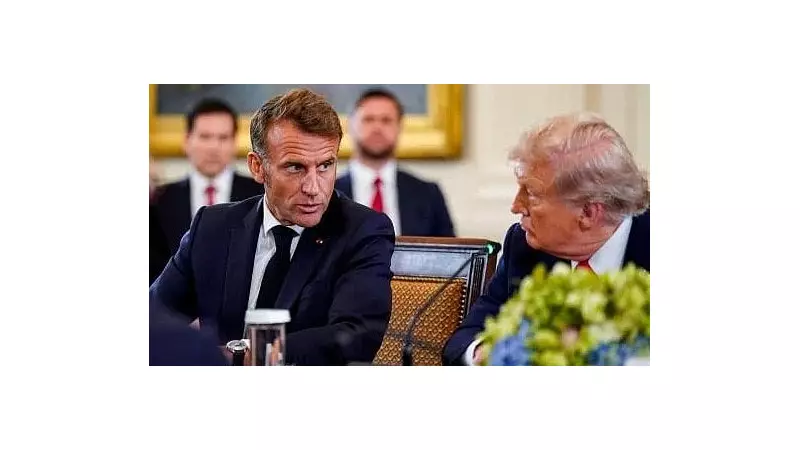
Former US President Donald Trump has publicly mocked his French counterpart, Emmanuel Macron, reigniting tensions over trade policies and diplomatic protocol. The incident underscores the persistent 'America First' stance that defined Trump's tenure and continues to influence global economic relations.
The Mockery That Sparked a Diplomatic Stir
During a recent address, Trump took a sharp jab at President Macron, focusing on the contentious issue of tariffs. He sarcastically remarked, "People who respect me call me Mr. President", a comment widely interpreted as a direct slight against the French leader. This verbal jab is not an isolated event but part of a long-standing pattern of friction between the two figures, rooted in differing approaches to international trade and diplomacy.
The core of the dispute lies in Trump's aggressive trade policies. During his presidency, he frequently imposed tariffs on allies and rivals alike, arguing they were necessary to protect American industries. France and the European Union were often targets of these measures, leading to retaliatory actions and creating a volatile transatlantic trade environment.

A History of Tension and Tariffs
The relationship between Trump and Macron has been notably rocky. While there were initial displays of camaraderie, their differing worldviews on climate change, multilateral agreements, and trade quickly surfaced. Trump's decision to withdraw from the Paris Climate Accord was a significant point of contention with Macron, who positioned himself as a champion of the agreement.
On the economic front, Trump's administration threatened tariffs of up to 100% on iconic French products like champagne, cheese, and handbags. This was in retaliation for France's digital services tax, which targeted major American tech giants. The threat created anxiety across European markets and strained diplomatic channels, with Macron advocating for a unified EU response.
Trump's recent comments suggest a continued defense of his protectionist 'America First' doctrine. He frames tariffs not as a provocation but as a necessary tool of negotiation and a means to correct what he perceives as unfair trade imbalances that disadvantage American workers.
Implications for Future Relations
This public mockery has several implications. Firstly, it highlights how Trump's political style, characterized by personal taunts and unconventional diplomacy, continues to resonate with his base as he campaigns for a potential return to office. It signals that a second Trump term could see a revival of aggressive trade postures towards Europe.
Secondly, for allies like France and the broader European Union, it reinforces the need for strategic autonomy. The incident is a reminder of the unpredictable nature of the transatlantic partnership under Trump's leadership, pushing Europe to strengthen its own economic defenses and pursue independent trade policies.
Finally, it sets a tone for the ongoing US presidential election cycle, where foreign policy and trade will be critical issues. Trump's remarks are a clear message that his approach to allies remains transactional and firm, centered on leveraging American economic power to secure perceived advantages.
In conclusion, Donald Trump's derisive comments about Emmanuel Macron are more than just a personal feud. They are a manifestation of deep-seated disagreements on global trade and national sovereignty. As Trump remains a dominant force in American politics, this episode serves as a preview of the potential diplomatic challenges ahead, emphasizing that the era of tariff wars and 'America First' rhetoric may be far from over.