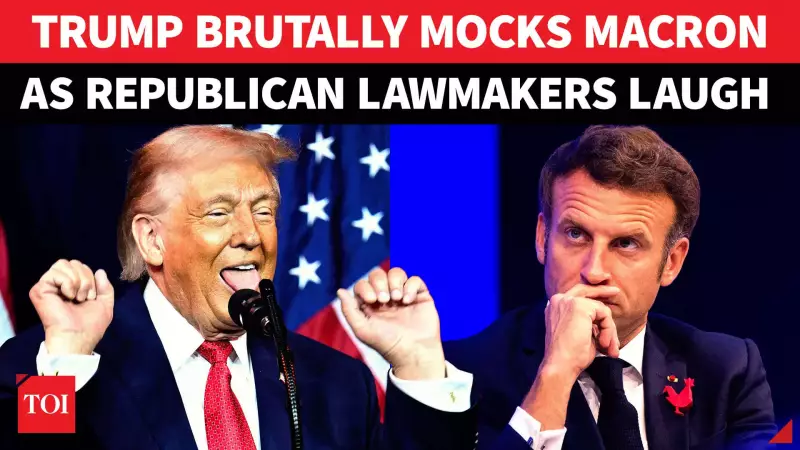
In a candid and unfiltered moment that left Republican lawmakers gasping and laughing, former US President Donald Trump openly mocked French President Emmanuel Macron and detailed his aggressive tactics to force other nations to raise prescription drug prices. The incident occurred at a GOP gathering on January 7, 2026.
Shocking Mockery and Policy Boasts
Addressing a room full of supporters, Trump recounted his interactions with world leaders during his presidency. He specifically targeted President Emmanuel Macron of France, mimicking him in a manner that drew strong reactions from the audience. The former president boasted about his administration's strategy to end what he called decades of American subsidization of global healthcare.
Trump claimed his "favoured nation" policy was a key tool in this effort. He described using the threat of tariffs to pressure allies into rapidly increasing their prices for prescription medications. The underlying argument was that other countries paid significantly less for drugs, unfairly burdening American consumers and the healthcare system.

The 'Favoured Nation' Strategy Explained
The core of Trump's revelation centred on a hardline trade and health policy approach. He asserted that by designating certain nations under this policy and leveraging potential tariff penalties, he could compel immediate compliance. This, according to his speech, was intended to level the playing field by making other developed nations pay more, thereby theoretically reducing costs for the United States.
His description of these high-stakes diplomatic negotiations, coupled with the personal mockery of a key European ally, highlighted the unconventional and direct style that defined his presidency. The event underscored his continued influence within the Republican Party and his willingness to publicly detail confrontational tactics used on the global stage.
Reactions and Lasting Implications
While the Republican audience reacted with a mix of shock and amusement, the incident is likely to resonate in international diplomatic circles. Trump's comments provide a rare, public glimpse into the pressure campaigns waged behind closed doors over critical issues like pharmaceutical pricing. The affirmation of using economic threats as a primary tool for health policy objectives marks a significant point in US foreign policy discourse.
This episode not only reinforces Trump's political persona but also brings the complex issue of global drug pricing back into the spotlight. It raises questions about the long-term impact of such strategies on international alliances and the worldwide pharmaceutical market.