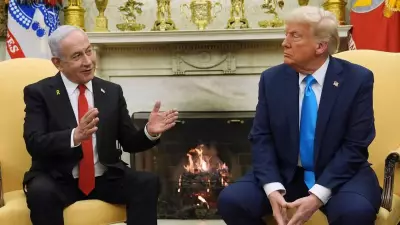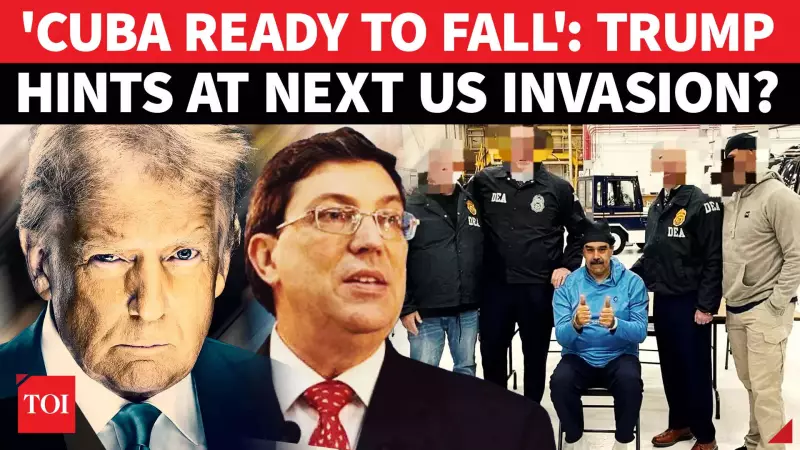
In a dramatic escalation of tensions in the Americas, former and now again US President Donald Trump has declared that Cuba is "ready to fall" following the controversial US-led operation that resulted in the seizure of Venezuelan President Nicolás Maduro. Trump made these remarks while speaking to reporters aboard Air Force One, suggesting that Havana's economy would crumble without access to heavily subsidised Venezuelan oil, thereby downplaying the immediate need for direct American military action against the island nation.
Regional Outrage and Diplomatic Condemnation
Trump's confident prediction comes amidst a wave of growing regional anger over the United States' intervention in Venezuela. The crisis was the focal point of an extraordinary session of the Community of Latin American and Caribbean States (CELAC). At this gathering, Cuban Foreign Minister Bruno Rodríguez delivered a fiery condemnation of the attack on Caracas.
Rodríguez labelled the operation an unambiguous act of aggression against all of Latin America. He demanded the immediate and unconditional release of not only President Nicolás Maduro but also Venezuela's First Lady, Cilia Flores. In his address, the Cuban diplomat accused Washington of attempting to forcibly resurrect the 19th-century Monroe Doctrine, a US policy historically used to justify intervention in the hemisphere.

"Barbarism will not prevail over international law," Rodríguez warned, urging fellow regional leaders to stand firm in defence of Venezuelan sovereignty. He also called for holding accountable those responsible for any lives lost during the military operation.
A Deepening Continental Confrontation
The starkly opposing stances from Washington and Havana are sharpening the political and diplomatic confrontation across the Americas. On one side, President Trump signals confidence in a domino effect, believing the removal of Maduro and the cutoff of vital oil subsidies will naturally lead to the collapse of Cuba's socialist government. On the other, Havana is rallying diplomatic resistance, framing the event as a fundamental threat to the sovereignty of every nation in the region.
This clash sets the stage for a potentially prolonged period of instability. The situation remains fluid, with the international community closely watching how other major powers with interests in Venezuela, such as Russia and China, will respond to these latest developments.
The Core of the Crisis: Oil and Sovereignty
At the heart of Trump's strategy appears to be the economic lifeline between Caracas and Havana. For years, Venezuela has provided Cuba with oil under favourable terms, a crucial support for the Cuban economy. By removing Maduro, the US effectively severs this link, creating severe economic pressure on Cuba. Trump's comments from Air Force One explicitly highlighted this vulnerability, suggesting that direct invasion may not be necessary if economic collapse achieves the same goal.
However, this realpolitik approach has ignited a fierce backlash. The strong response from CELAC members indicates that many Latin American and Caribbean nations view the US action not as a targeted intervention but as a dangerous precedent that threatens the principle of non-intervention. The invocation of the Monroe Doctrine by the Cuban FM is particularly potent, evoking a long history of resented US hegemony in the region.
As diplomatic channels buzz with activity and protests continue, the aftermath of Maduro's seizure is rapidly defining a new and volatile chapter in inter-American relations.