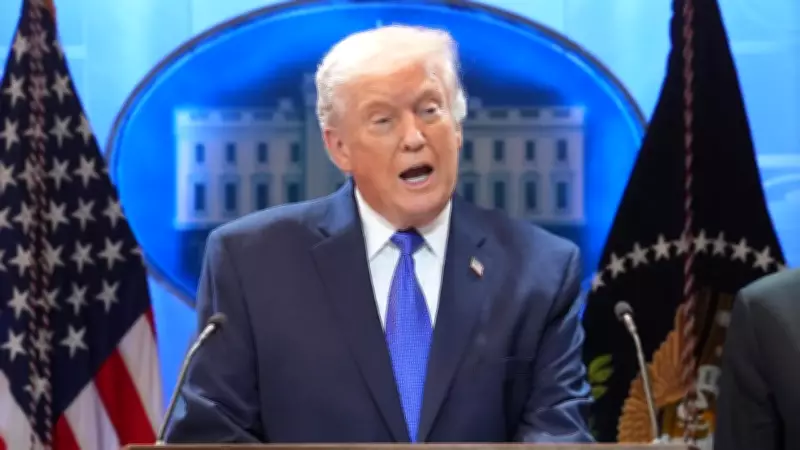
Trump Launches Fiery Attack on Supreme Court Following Tariff Decision
Former US President Donald Trump unleashed a scathing criticism of the Supreme Court on Saturday, just one week after the judicial body struck down his comprehensive global tariff program. In a strongly worded statement, Trump warned that the ruling "could allow for Hundreds of Billions of Dollars to be returned to Countries and Companies that have been 'ripping off' the United States of America for many years."
Truth Social Post Questions Judicial Reasoning
Through his Truth Social platform, Trump expressed his frustration with the court's decision, suggesting it "could actually continue to do so, at an even increased level." He added pointedly: "I am sure that the Supreme Court did not have this in mind! It doesn't make sense that Countries and Companies that took advantage of us for decades... would now be entitled to an undeserved 'windfall,' the likes of which the World has never seen before, as a result of this highly disappointing, to say the least, ruling."
The former president directly questioned the judgment's finality, asking: "Is a Rehearing or Readjudication of this case possible???" This rhetorical challenge underscores his ongoing dissatisfaction with the judicial process that overturned his signature trade policy.

Constitutional Basis of the Supreme Court Decision
The Supreme Court reached its decision by a 6-3 majority, ruling that Trump's utilization of emergency powers under the 1977 International Emergency Economic Powers Act to implement broad "reciprocal" tariffs was unconstitutional. Chief Justice John Roberts authored the majority opinion, emphasizing that the Constitution does not grant the executive branch unilateral authority to levy taxes. Roberts noted that the framers deliberately avoided vesting such taxing power in the presidency, preserving that authority for Congress.
Economic Uncertainty and Business Implications
This landmark decision has created substantial uncertainty for businesses and global trading partners. While reduced import duties might typically alleviate pressure on companies and consumers, economists caution that the current legal turmoil and shifting signals from the White House could negate any potential benefits. The ruling opens the door for billions of dollars in previously collected tariffs to face refund claims, though the court did not establish specific procedures for how this reimbursement process should unfold.
Trump's Response and Future Trade Plans
Despite the judicial setback, Trump signaled his determination to pursue alternative approaches. Within hours of the ruling's announcement, he pledged to utilize different legal authority to impose a new 10% tariff, later increasing that figure to 15%. This rapid response demonstrates his continued commitment to protectionist trade policies and suggests ongoing trade tensions regardless of judicial constraints.
The confrontation between the former president and the judicial branch highlights significant tensions between executive authority and constitutional limits, with substantial implications for international trade relations and domestic economic policy. As refund claims potentially mount and new tariff measures are proposed, businesses face continued uncertainty in navigating the evolving trade landscape.