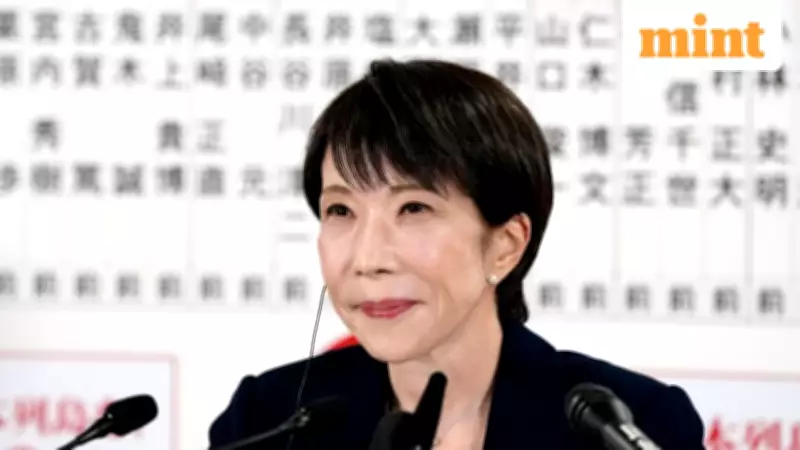
Japan's Prime Minister Sanae Takaichi Achieves Landslide Election Victory
Japanese Prime Minister Sanae Takaichi has successfully led her party to a resounding triumph in parliamentary elections, securing a powerful mandate to advance her agenda of strengthening ties with the United States and revitalizing Japan's economy. This victory marks a significant political achievement for the 64-year-old conservative leader, who took office just three months prior and called a risky snap vote during a harsh winter season.
A Bold Gamble Pays Off for Takaichi
Takaichi's decision to hold early elections was a high-stakes move aimed at solidifying her authority amid challenges such as sluggish economic growth and deteriorating relations with China. Her straightforward communication style and outsider status as a woman in a male-dominated political landscape resonated strongly with voters, many of whom braved heavy snowfall to cast their ballots.
According to projections by public broadcaster NHK, Takaichi's Liberal Democratic Party (LDP) and its coalition partner, the Japan Innovation Party, are on track to win approximately 300 seats in the 465-seat lower house of parliament. This represents a substantial increase from their previous combined total of 230 seats, with the LDP alone projected to secure a majority—a notable shift after over a decade of coalition governments.

Voter Enthusiasm and Opposition Struggles
Voters expressed admiration for Takaichi's proactive approach and decisive leadership. Naoya Nakanishi, a voter in Tokyo, highlighted her ability to address issues affecting daily lives promptly and consistently. The election also saw a poor performance by the newly formed Centrist Reform Alliance, which failed to generate significant voter interest despite uniting two opposition groups.
Strengthening US-Japan Relations and Defense Policies
Takaichi, a pro-U.S. leader, has pledged to increase defense spending and bolster Japanese industry, positioning Japan as an indispensable partner for the United States in Asia. Her rapport with U.S. President Donald Trump, established during his visit to Tokyo in October, has been a key factor, with Trump endorsing her leadership ahead of the election. Takaichi is scheduled to travel to Washington next month for a summit with Trump, where she will seek reassurance on U.S. commitment to regional security in Asia.
Navigating Tensions with China
The election results indicate voter approval of Takaichi's handling of China, despite tensions over her remarks regarding Taiwan. In November, she stated that Japan could be drawn into any military conflict over Taiwan, which Beijing views as part of its territory. China responded angrily, imposing trade restrictions on Japanese companies, but Takaichi has stood by her comments, citing longstanding Japanese policy.
Domestic Economic Challenges Ahead
On the domestic front, Takaichi faces the task of addressing concerns in financial markets about potential inflation from increased borrowing and spending, while also tackling voter dissatisfaction over stagnant living standards. Her victory provides a strong foundation to implement economic reforms and industrial policies aimed at boosting growth.
This election outcome underscores Takaichi's rising influence and sets the stage for a more assertive Japanese foreign policy, particularly in strengthening alliances and managing regional dynamics with China and the United States.