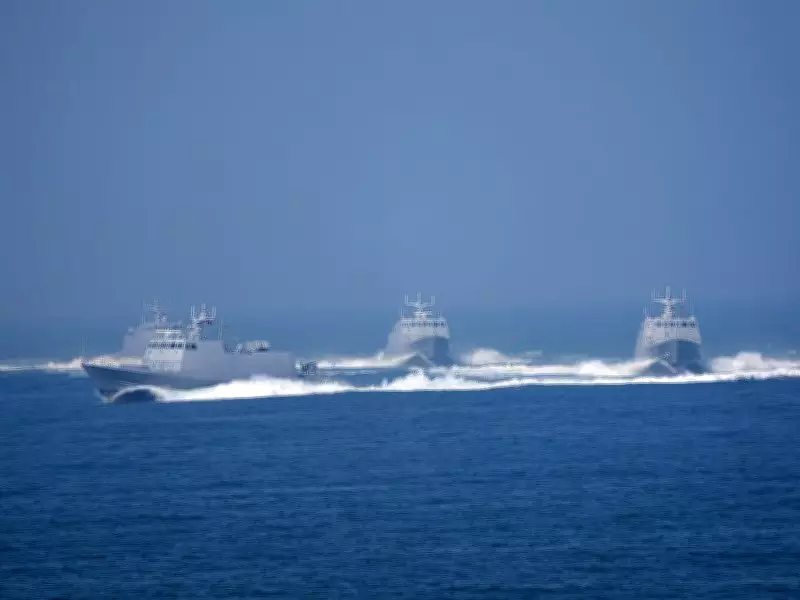
Taiwan Detects Significant Chinese Military Presence Near Its Territory
Taiwan's Ministry of National Defense has reported a substantial increase in Chinese military activity around the island, with the detection of 30 People's Liberation Army (PLA) aircraft and 6 naval vessels operating in the vicinity of its territory. This development marks a notable escalation in the ongoing tensions across the Taiwan Strait, raising concerns about regional stability and security.
Details of the Military Sorties and Naval Movements
The Taiwanese defense authorities closely monitored the movements, which occurred over a specified period, although the exact timing was not disclosed in the initial report. The 30 PLA aircraft included various types, such as fighter jets and surveillance planes, which were observed conducting sorties that approached Taiwan's air defense identification zone (ADIZ). Simultaneously, the 6 naval vessels, part of the PLA Navy, were detected patrolling waters near Taiwan, underscoring a coordinated military demonstration by China.
This activity is part of a broader pattern of increased Chinese military presence in the region, which Beijing often justifies as routine exercises aimed at safeguarding national sovereignty. However, Taiwan views these actions as provocative maneuvers that threaten its security and territorial integrity. The island's defense ministry has reiterated its commitment to monitoring such activities and maintaining a high state of readiness to respond to any potential threats.

Regional and International Implications
The detection of 30 PLA aircraft and 6 naval vessels comes amid heightened geopolitical tensions, with Taiwan being a focal point in the complex relationship between China and the United States. China considers Taiwan part of its territory and has not ruled out the use of force to achieve reunification, while Taiwan maintains its de facto independence with robust international support, particularly from the U.S.
This incident highlights the volatile nature of cross-strait relations, as similar military activities have previously led to diplomatic spats and increased defense posturing by both sides. Analysts suggest that such displays of military might are intended to signal China's resolve and deter any moves toward formal independence by Taiwan, while also testing the responses of regional allies and global powers.
Taiwan's Response and Defense Preparedness
In response to the detected sorties and naval movements, Taiwan's military has activated its defense systems, including radar tracking and air patrols, to ensure the safety of its airspace and waters. The defense ministry issued a statement urging calm but emphasizing its capability to defend against any aggression. Taiwan has also called on the international community to take note of China's actions, framing them as destabilizing to the peace and security of the Indo-Pacific region.
This event underscores the ongoing challenges in the Taiwan Strait, where military incidents risk escalating into broader conflicts. As Taiwan continues to bolster its defense capabilities with support from partners like the U.S., the dynamics of this strategic hotspot remain a critical concern for global security observers.