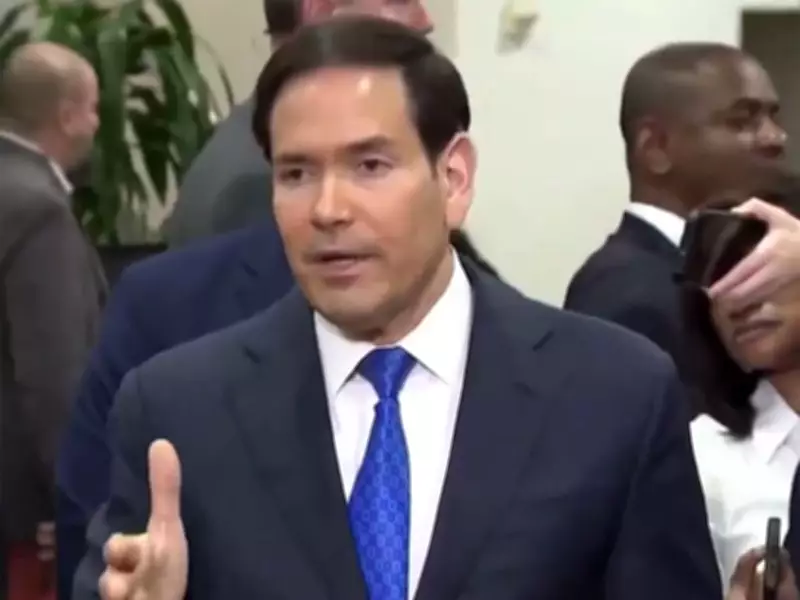
Rubio's Fiery Critique: Iran's Leadership Branded as 'Lunatics' in Security Warning
In a stark and provocative statement, United States Secretary of State Marco Rubio has launched a scathing attack on Iran's ruling establishment, describing its leaders as "lunatics". Rubio emphasized that the world would be a significantly safer place if Iran's clerical regime were stripped of its access to advanced weaponry, particularly nuclear capabilities. This declaration underscores the deepening rift between Washington and Tehran, fueled by longstanding geopolitical rivalries and recent escalations in the Middle East.
Escalating Rhetoric Amid Nuclear Tensions
The comments from Secretary Rubio come at a critical juncture, as international efforts to revive the Iran nuclear deal, formally known as the Joint Comprehensive Plan of Action (JCPOA), have stalled. Rubio argued that Iran's current leadership, dominated by hardline clerics, poses an unacceptable risk to global stability. He pointed to Iran's ballistic missile program and its support for proxy militias across the region as evidence of its destabilizing behavior. According to Rubio, disarming these clerics is not merely a diplomatic preference but a fundamental necessity for preventing conflict and ensuring peace.
Global Implications and Diplomatic Fallout
Rubio's remarks are likely to exacerbate already tense relations between the United States and Iran, potentially complicating future negotiations. The Biden administration has expressed a desire to return to the nuclear agreement, but Rubio's hardline stance reflects a broader skepticism within certain political circles about engaging with Tehran. Experts warn that such inflammatory language could harden positions on both sides, making diplomatic breakthroughs more elusive. The international community, including European allies, has urged restraint, emphasizing the need for dialogue to address security concerns without resorting to bellicose rhetoric.

Historical Context and Regional Dynamics
Iran's clerical leadership, established after the 1979 Islamic Revolution, has long been a focal point of US foreign policy criticism. Rubio's comments echo decades of American apprehension regarding Iran's nuclear ambitions and its influence in the Middle East. Recent incidents, such as attacks on shipping in the Persian Gulf and drone strikes attributed to Iranian-backed groups, have only intensified these fears. Rubio asserted that as long as the current regime remains in power with access to weapons, the potential for catastrophic escalation persists, threatening not only regional neighbors but global security at large.
In conclusion, Secretary Rubio's blunt assessment highlights a pivotal challenge in international relations: balancing diplomatic engagement with firm security measures. As the world watches, the path forward will require careful navigation to avoid further destabilization while addressing legitimate concerns about Iran's military capabilities.