Robert Mueller, Former FBI Director and Special Counsel, Passes Away at 81
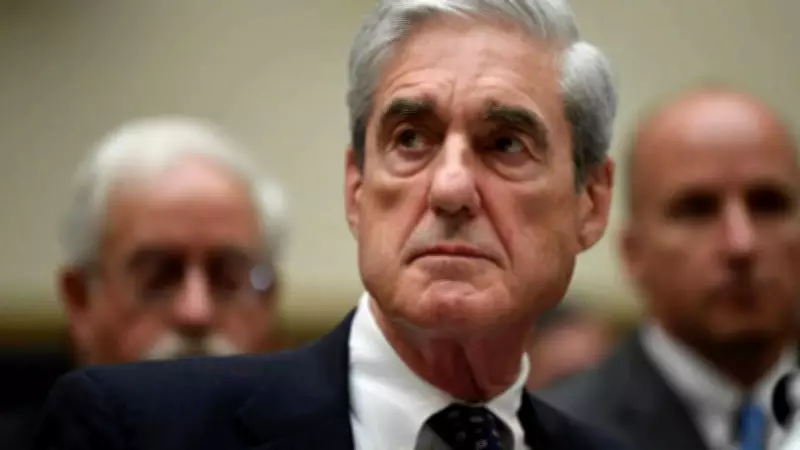
Robert Mueller, the former FBI director who led the high-profile investigation into alleged ties between Donald Trump's 2016 presidential campaign and Russia, has died at the age of 81. His family announced the news in a statement on Saturday, requesting privacy during this difficult time.
A Respected Public Servant with a Long Career
Mueller had been diagnosed with Parkinson's disease in 2021. Throughout much of his career, he was widely respected across political party lines. Appointed by President George W. Bush in 2001, Mueller served as FBI director for 12 years, with President Barack Obama later asking him to extend his tenure. This made him the longest-serving FBI chief since the era of J. Edgar Hoover.
The Landmark Russia Investigation
In 2017, Mueller was appointed as special counsel to investigate Russian interference in the 2016 US election and possible connections to the Trump campaign. His 2019 report detailed numerous contacts between Trump associates and Russian officials, noting that the campaign "expected it would benefit electorally" from information released through Russian efforts.

However, the investigation did not establish a criminal conspiracy between the campaign and Russia. Mueller also declined to charge Trump with obstruction of justice, citing Justice Department guidelines against indicting a sitting president. "If we had confidence that the president clearly did not commit a crime, we would have said so," Mueller stated at the time.
The probe resulted in charges against 37 individuals and entities, with several Trump associates—including Paul Manafort, Michael Flynn, and Michael Cohen—convicted or pleading guilty. Despite this, the investigation became deeply polarizing, with Trump repeatedly labeling it a "witch hunt."
Reactions and Legacy
Reacting to Mueller's death, Trump wrote on Truth Social: "Robert Mueller just died. Good, I'm glad he's dead. He can no longer hurt innocent people!" This stark contrast highlights the divisive nature of Mueller's later work.
Beyond the Russia probe, Mueller had an extensive career in public service. A decorated Marine veteran of the Vietnam War, he rose through the Justice Department, overseeing major prosecutions such as those of Manuel Noriega and John Gotti. He also played a key role in investigating the 1988 Lockerbie bombing.
As FBI director, Mueller led the bureau through the aftermath of the September 11 attacks, overseeing a significant shift toward counterterrorism and expanded surveillance powers under the Patriot Act. In his later years, he warned that foreign election interference could become a persistent threat, telling Congress in 2019, "I hope this is not the new normal. But I fear it is."
Mueller's death marks the end of a consequential chapter in American law enforcement and political history, leaving behind a complex legacy of service and controversy.