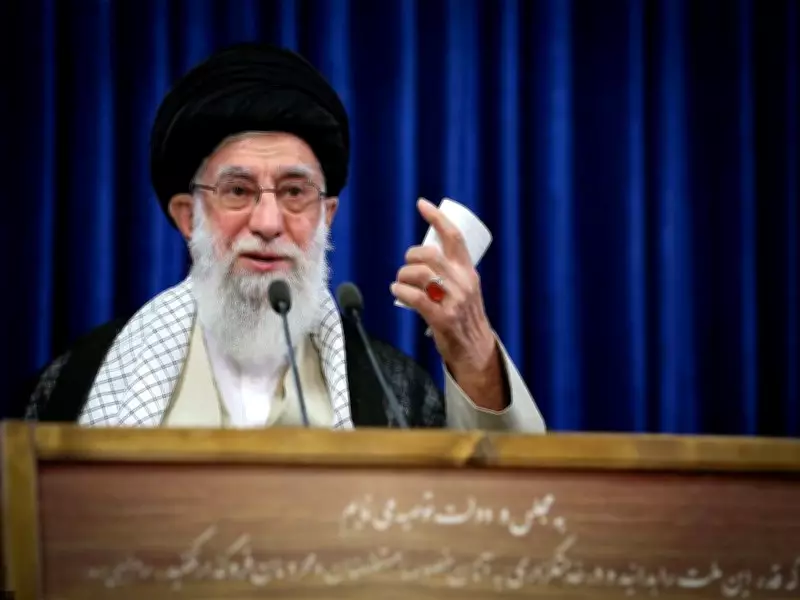
House Republicans Proclaim 'Lead Architect of Global Terrorism' Dead Amid Unverified Reports on Khamenei
In a bold and provocative statement, U.S. House Republicans have declared the "lead architect of global terrorism" dead, responding to unconfirmed reports regarding the passing of Iranian Supreme Leader Ayatollah Ali Khamenei. This announcement underscores the deep-seated animosity and geopolitical friction between the United States and Iran, reflecting a significant moment in international relations.
Unverified Reports Trigger Political Reaction
The statement from House Republicans emerged following widespread but unverified rumors circulating about the death of Ayatollah Ali Khamenei, who has served as Iran's supreme leader since 1989. While official confirmation from Iranian authorities remains absent, the U.S. political figures seized the opportunity to voice their stance on Iran's role in global affairs.
The Republicans labeled Khamenei as the "lead architect of global terrorism," a characterization that aligns with long-standing U.S. accusations against Iran for supporting militant groups and engaging in activities deemed destabilizing worldwide. This rhetoric is not new but gains intensity in the context of these reports, highlighting the ongoing diplomatic and ideological clashes.

Context of U.S.-Iran Relations
Relations between the United States and Iran have been fraught with tension for decades, marked by conflicts over nuclear programs, regional influence, and human rights issues. The Republican statement can be seen as a continuation of U.S. policies that often criticize Iran's government and its leaders. This incident adds another layer to the complex narrative of Middle Eastern politics and U.S. foreign policy.
Key points in the current dynamics include:
- Iran's support for groups like Hezbollah and Hamas, which the U.S. designates as terrorist organizations.
- Ongoing negotiations and disputes over Iran's nuclear capabilities.
- Recent escalations in regional conflicts involving Iranian proxies.
Implications and Reactions
The House Republicans' declaration, while based on unconfirmed reports, could have several implications:
- Diplomatic Strain: Such statements may further strain already tense diplomatic relations, potentially complicating future negotiations or dialogues.
- Domestic Politics: In the U.S., this aligns with Republican critiques of the Biden administration's approach to Iran, possibly influencing domestic political discourse.
- Global Perception: Internationally, it reinforces the U.S. stance on Iran, potentially affecting alliances and perceptions in regions like the Middle East and Europe.
As of now, Iranian officials have not commented on the reports or the Republican statement, leaving the situation in a state of uncertainty. Observers note that without official verification, such political reactions should be viewed with caution, as they could be based on misinformation or premature assumptions.
Looking Ahead
This event highlights the volatile nature of international politics, where unverified news can trigger significant political statements. It serves as a reminder of the importance of reliable information in shaping global narratives. Moving forward, the focus will likely be on any official updates from Iran and the broader impact on U.S.-Iran relations, which remain a critical issue in world affairs.